Effective Change Management: A Comprehensive Approach to Transition and Transformation
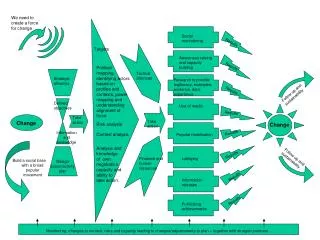
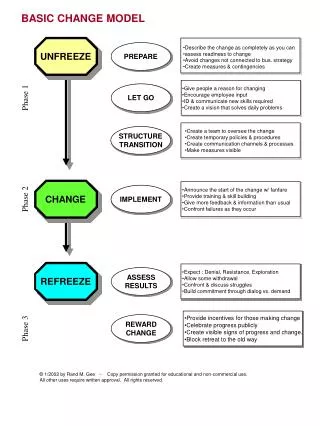
Change is inevitable in any organization. This guide outlines a structured approach to implement successful change by focusing on key phases: Unfreeze, Transition, Implement, Assess, and Refreeze. Begin by preparing and engaging employees, emphasizing the importance of training and feedback. During the change, expect challenges like resistance and denial, and provide support through open dialogue. Measure progress and celebrate successes to reinforce the new direction, ensuring that the organization remains committed to change while avoiding a regression to old habits.

Effective Change Management: A Comprehensive Approach to Transition and Transformation
E N D
Presentation Transcript
Announce the start of the change w/ fanfare • Provide training & skill building • Give more feedback & information than usual • Confront failures as they occur IMPLEMENT CHANGE • Expect : Denial, Resistance, Exploration • Allow some withdrawal • Confront & discuss struggles • Build commitment through dialog vs. demand ASSESS RESULTS REFREEZE • Provide incentives for those making change • Celebrate progress publicly • Create visible signs of progress and change. • Block retreat to the old way BASIC CHANGE MODEL • Describe the Change as completely as you can • Assess readiness to change • Avoid changes that aren’t critical • Create measures & contingencies • Describe the change as completely as you can • assess readiness to change • Avoid changes not connected to bus. strategy • Create measures & contingencies UNFREEZE PREPARE • Give people a reason for changing • Encourage employee input • ID & communicate new skills required • Create a vision that solves daily problems Phase 1 LET GO • Create a team to oversee the change • Create temporary policies & procedures • Create communication channels & processes • Make measures visible STRUCTURE TRANSITION Phase 2 REWARDCHANGE Phase 3 • 1/2002 by Rand M. Gee ~ Copy permission granted for educational and non-commercial use. All other uses require written approval. All rights reserved.
UNFREEZE PREPARE LET GO STRUCTURE TRANSITION IMPLEMENT CHANGE ASSESS REACTION REFREEZE REWARDCHANGE BASIC CHANGE MODEL Phase 1 Phase 2 Phase 3 • 1/1999 by Rand M. Gee ~ Copy permission granted for educational and non-commercial use.