SlideServe
Menu
Préférences
© SlideServe · v2026

Characteristics of Living Things

marsden-harvey avatar
12 diapositives · 497 Views · Nov 08, 2014

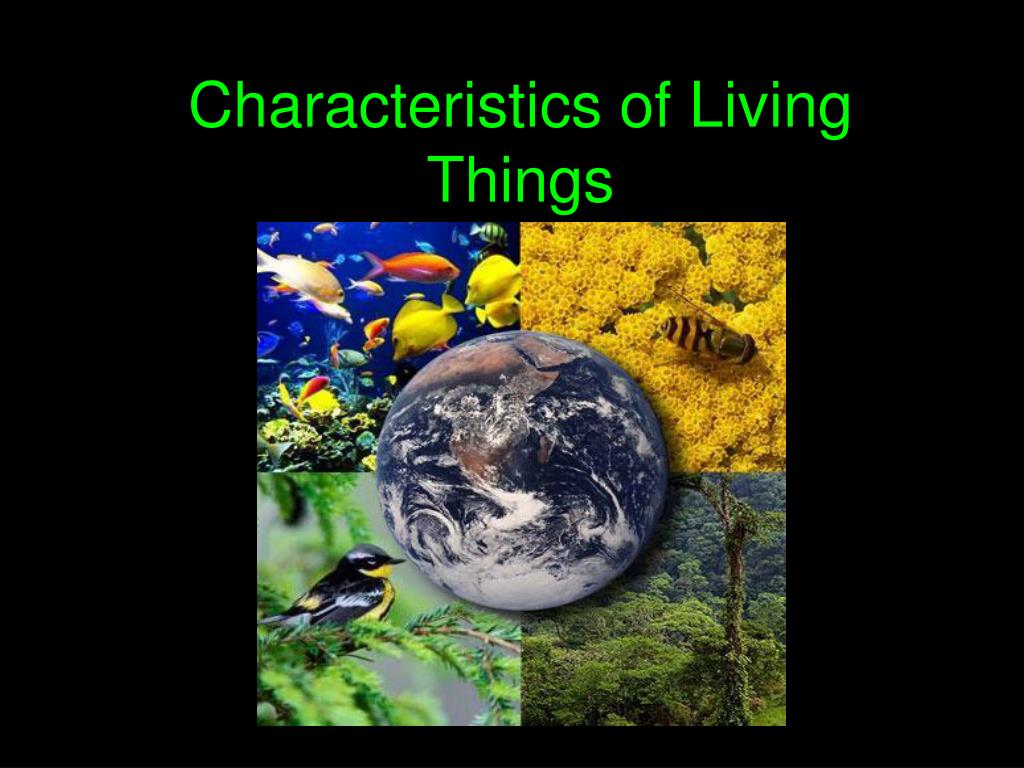
Characteristics of Living Things. Defining a living thing is a difficult task. How would you define “living”? What is life? What do you need to survive? What does a plant need? What does a fish need?. A living thing possesses certain properties that help define what life is. 1. Cells.
Characteristics of Living Things - slide 1
01 / 12Characteristics of Living Things
1 / 17

Télécharger la présentation

Characteristics of Living Things
Une image / un lien ci-dessous est fourni (tel quel) pour télécharger la présentation

Politique de téléchargement : le contenu du site vous est fourni TEL QUEL pour votre information et votre usage personnel ; il ne peut être vendu, concédé sous licence ni partagé sur d’autres sites sans l’accord de son auteur.Le contenu vous est fourni TEL QUEL, pour votre information et votre usage personnel uniquement. Téléchargez la présentation en cliquant sur ce lien. Lors du téléchargement, si vous ne parvenez pas à télécharger une présentation, l’éditeur a peut-être supprimé le fichier de son serveur.Pendant le téléchargement, si vous ne parvenez pas à obtenir une présentation, le fichier a peut-être été supprimé par l’éditeur.

F I N

Plus de contenu associé

Transcription de la présentation
  1. Characteristics of Living Things

  2. Defining a living thing is a difficult task. • How would you define “living”? • What is life? • What do you need to survive? • What does a plant need? • What does a fish need?

  3. A living thing possesses certain properties that help define what life is.

  4. 1. Cells Amoeba - single celled organism Snail - multi-celled organism • All living things are made up of one or more cells. • The cell is the smallest functioning unit of all living things. • A living thing can be composed of one cell or many cells.

  5. Cells • Cells are usually too small to be seen with the naked eye. • Cells are organized into tissues - a group of cells that perform the same function. • Tissues form organs such as the stomach and kidney. • A number of organs compose an organ system such as the digestive system. • An organism is a complex structure of organ systems. Human Heart

  6. 2. Metabolism • All living things are capable of taking materials from the surroundings and using them for energy to survive. • Organisms acquire nutrition by absorption, photosynthesis or ingestion.

  7. 3. Response to Stimuli • All living things are able to respond to stimuli in the environment. • Living things respond to light, heat, sound and contact with chemicals or other objects. • Organisms can detect stimuli with eyes, ears, taste buds etc.

  8. 4. Growth • All organisms grow or mature over time. • During growth a living thing transforms material that is unlike itself into materials that are like it. • A human digests a meal of meat and vegetables and transforms the material into more of him/herself.

  9. 5. Reproduction • All living things contain the universal genetic code and have the ability to produce copies of itself by a process called reproduction. • Bacteria grow quickly and split into two organisms by a process called asexual reproduction. • More complex organisms, like animals, engage in sexual reproduction which requires two parents that contribute genes to their offspring.

  10. 6. Respiration • All living things exchange gas with the environment. • Animals inhale oxygen gas and exhale carbon dioxide gas • Plants absorb carbon dioxide from the environment and release oxygen. • Organisms perform chemical reactions during respiration.

  11. 7. Homeostasis • All living things must maintain a stable internal condition no matter the environment. • Animals regulate body temperature by sweating or shivering. • Organisms perform chemical reactions and have physical properties that help to maintain homeostasis.

  12. 8. Evolution • Populations of organisms have the ability to adapt to their environment through the process called evolution. • During evolution changes occur in populations, and the organisms in the population become better able to metabolize, respond and reproduce. • Organisms develop abilities to cope with their environment that their ancestors did not.