Circulatory and Respiratory Review
580 likes | 703 Vues
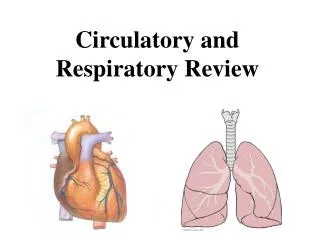
The circulatory system is vital for maintaining homeostasis, regulating temperature, and delivering essential gases and nutrients throughout the body. The human heart consists of four chambers: the left and right atria. Key components include arteries, veins, and capillaries, each with specific functions in blood circulation. Red blood cells (erythrocytes) transport oxygen, while white blood cells (leukocytes) defend against invaders. Blood pressure measures the force against artery walls, and conditions like hypertension can occur. Additionally, the respiratory system aids in oxygen intake and sound production.


Circulatory and Respiratory Review
E N D
Presentation Transcript
Maintains homeostasis • Regulate temperature • Delivers gases and nutrients
Arteries carry blood to the body from the heart filled with oxygen. They have a larger ring of smooth muscle. • Veins carry CO2 filled blood back to the heart. They contain valves • Capillaries are microscopic and is the site of gas exchange.
What are the scientific names for Red Blood Cells and White Blood Cells?
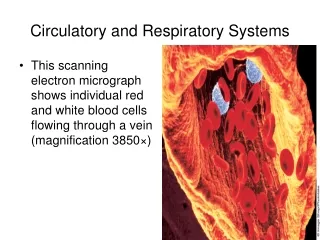
Erythrocytes • Leukocytes
What is the term for hardening of the arteries with fat deposits?
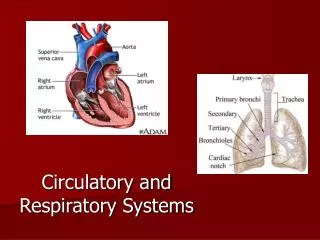
Name the major blood vessels entering and leaving the heart.
Entering: superior and inferior vena cava • Leaving: Aorta
Systole measure the contraction of blood traveling out of the heart on the artery walls. • Diastole measures its relaxation
Hematocrit = 45% • Plasma = 55%
Donor = type O • Recipient = type AB
What line of defense do the lungs use against debris that has gone into the lungs?