Understanding CPR and the Heart's Function: A Comprehensive Guide
This resource outlines essential concepts in life-saving techniques like hands-only CPR and the heart's mechanics, including blood collection, pumping, and valve actions. It discusses the differences between compression-only CPR and conventional CPR, presenting data on survival rates to illustrate the significance of prompt action during cardiac emergencies. Through visual aids and relevant links, this guide aims to enhance understanding of cardiovascular physiology and promotes early intervention to save lives.

Understanding CPR and the Heart's Function: A Comprehensive Guide
E N D
Presentation Transcript
Transport System (Core) Ms. Fargo Courtesy of Stephen Taylor
Flip it: • Allott & Mindorff: p219-225, Allott p48 • i-Biology: http://goo.gl/KetyW • Watch Hank: http://youtu.be/9fxm85Fy4sQ • Complete the Quia Quiz before class. Command terms: http://i-biology.net/ibdpbio/command-terms/ Assessment statements from: Online IB Biology Subject Guide
Hands-only CPR. Your blood has oxygen in it – but it is not getting to the brain and other organs. Hands-only CPR keeps the blood flowing until help arrives with the Automatic External Difibrilator(AED). The electrical signal is needed to re-start the heart, and we’ll learn why this is in a little while. http://www.youtube.com/watch?v=ILxjxfB4zNk http://youtu.be/ILxjxfB4zNk Call for help. Push hard and fast to the beat of Stayin’ Alive. Don’t stop until help arrives. Learn more here: http://www.bhf.org.uk/heart-health/life-saving-skills/hands-only-cpr.aspx
Data practice: CPR survival rates. Get started early to save a life! These data compare compression-only CPR with conventional CPR: neurologically favourable one-month survival. Population: bystander-assisted patients, transferred to hospital by ambulance. Japan. 2005 – 2007. Compression-only n=20,707 Conventional CPR n= 19,328 Compare survival rates of compression-only CPR with conventional CPR in all cases (top graph). Describe the effect of increasing time to start CPR on survival of patients in cases of cardiac origin. Calculate the difference in survival between hands-only CPR and conventional CPR in cases of non-cardiac origin after 7-8 minutes. Compare survival rates between cases of cardiac and non-cardiac origin. Suggest a reason for the differences. Data from: http://www.bmj.com/content/342/bmj.c7106.full
Stephen Taylor http://sciencevideos.wordpress.com
Stephen Taylor http://sciencevideos.wordpress.com
Stephen Taylor http://sciencevideos.wordpress.com
Stephen Taylor http://sciencevideos.wordpress.com
Stephen Taylor http://sciencevideos.wordpress.com
http://www.hhmi.org/biointeractive/obesity/heart_attack.html http://www.hhmi.org/biointeractive/obesity/heart_attack.html Stephen Taylor http://sciencevideos.wordpress.com
http://www.nucleusinc.com/animation2.php http://www.gwc.maricopa.edu/class/bio202/cyberheart/anthrt.htm
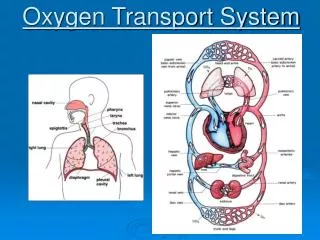
6.2.3Explain the action of the heart in terms of collecting blood, pumping blood, and opening and closing of valves. • Diastole • Heart muscle is relaxed, this is called diastole • No pressure in heart chambers • Blood tries to flow back into the heart but closes the semi-lunar valves • Both atria fill with blood returning to the heart in the veins • Right atria fills with blood returning in the vena cava from the body tissues (deoxygenated) • The atrio-ventricular valves are still closed and the atria fills up • When the pressure in the atria is greater than the pressure in the ventricles, the atrioventricular valves will open
6.2.3Explain the action of the heart in terms of collecting blood, pumping blood, and opening and closing of valves • Atrial systole • Both the atria contract together • The muscles of the atria contract • Volume of the atria reduces • Pressure of blood increases • Blood flows into the ventricle, filling this chamber and causing the ventricle wall to stretch
6.2.3Explain the action of the heart in terms of collecting blood, pumping blood, and opening and closing of valves • Ventricular systole • The vetntricle contracts (systole—think sieze=systole) • The pressure increases in the ventricle • The atrio-ventricular valve closes • The pressure rises further • Pressure in the ventricle is greater than the artery, semi-lunar valve opens • Blood pulses into the arteries
Stephen Taylor http://sciencevideos.wordpress.com
http://www.kscience.co.uk/animations/blood_system.swf Stephen Taylor http://sciencevideos.wordpress.com
6.2.5 Explain the relationship between the structure and function of arteries, capillaries, and veins Stephen Taylor http://sciencevideos.wordpress.com
6.2.4 Outline the control of the heartbeat in terms of myogenicmuslces contraction, the role of the pacemaker, nerves, the medulla of the brain and epinephrin (adrenaline) Stephen Taylor http://sciencevideos.wordpress.com
http://goo.gl/YeoeJ Stephen Taylor http://sciencevideos.wordpress.com
http://library.med.utah.edu/kw/pharm/hyper_heart1.html Stephen Taylor http://sciencevideos.wordpress.com
6.2.7 Stat that the following are transported by the blood: • Nutrients • Carbon dioxide • Hormones • Antibodies • Urea-- Important in preventing the loss of water, to maintain blood pressure, and to maintain a suitable concentration of sodium ions in the blood plasmas. • Heat