Understanding 7 Types of Propaganda Techniques and Their Impact
This article explores seven common types of propaganda techniques: Testimonial, Bandwagon, Name-Calling, Glittering Generalities, Card Stacking, Plain Folks, and Transfer. It explains how each method influences public perception and behavior. From the endorsements of celebrities to the emotional appeals of ordinary endorsements, propaganda shapes our choices and beliefs in subtle yet powerful ways. Learn how these strategies create perceptions, foster support, and affect our views on products, ideas, and individuals.

Understanding 7 Types of Propaganda Techniques and Their Impact
E N D
Presentation Transcript
7 TYPES OF PROPAGANDA
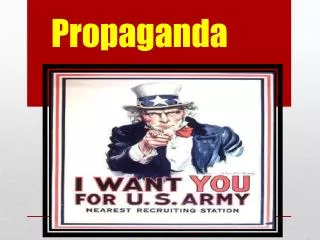
TESTIMONIAL Usually involves SOMEONE officially endorsing a product or idea. This someone can be a celebrity, an expert on whatever is being endorsed, or an ordinary person who claims the product has worked for them.
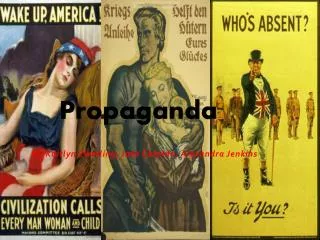
BANDWAGON i.e “Jumping on the bandwagon” Creates the impression that there is widespread support for one thing or idea — peer pressure makes people want to join in.
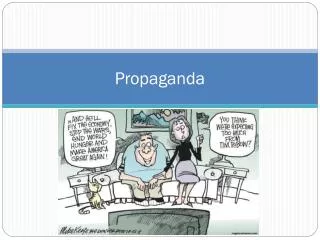
NAME-CALLING Using negative words and bad names to create fear/dislike for people, ideas, or institutions. Can be done verbally or visually.
Glittering Generalities Shows the subject of the message in a positive light, but provides little or no information. Simple, clever slogans.
Card stacking Uses facts and figures to show one side as positive and the other side as negative.
PLAIN FOLKS Designed to send the message that a product or person is “just like you.” For example: Politicians go to family restaurants, or advertisers show “ordinary” person who vouches for a product.
TRANSFER Uses your feelings about one thing to get you to feel the same way about something else.