PULMONARY PATHOLOGY
PULMONARY PATHOLOGY. LECTURE 6 RESPIRATORY SYSTEM DEPARTMENT OF HEALTH SCIENCES DR SHAI WEEK OF NOVEMBER 10, 2013. OBJECTIVES. Upper Respiratory Tract Disorders Inflammatory conditions Neoplasms Lung Diseases COPD Emphysema Asthma Bronchitis Neoplasms Interstitial diseases.

PULMONARY PATHOLOGY
E N D
Presentation Transcript
PULMONARY PATHOLOGY LECTURE 6 RESPIRATORY SYSTEM DEPARTMENT OF HEALTH SCIENCES DR SHAI WEEK OF NOVEMBER 10, 2013
OBJECTIVES • Upper Respiratory Tract Disorders • Inflammatory conditions • Neoplasms • Lung Diseases • COPD • Emphysema • Asthma • Bronchitis • Neoplasms • Interstitial diseases
Inflammatory Conditions Upper Respiratory Tract • Rhinitis: • Inflammation of nasal mucosa • Acute or chronic • Acute • Aetiology: infection (viral: rhinovirus, respiratory syncytial virus, influenza, corona) or allergy (hay fever) type I hypersensitivity reaction • Signs: blocks nasal airways • Chronic infection / allergy causing chronic inflammation • Signs: Macroscopic: nasal polyps, microscopic: oedematous tissue with inflammatory cells, eosinophils
Sinusitis • Inflammation of the sinuses • Acute • Acute maxillary sinusitis (ethmoid & frontal less common) • Aetiology: 2ndary to rhinitis • Pathogenesis: inflammation in sinus lining, mucosa swells> stasis of maxillary sinus secretions> 2ndary bacterial infection> purulent mucous • Chronic • Chronically thick & inflammed mucosa of sinus • Aetiology: acute sinusitis, cigarette smoke, industrial exposure, polyps
Necrotizing Lesions • A. Mucormycotic lesions • Opportunistic* fungal infections of nose from immunosuppression> fatal unless treated rapidly • B. Lymphoma • Progressive ulceration & destruction of structures in nose, sinus, form of T cell lymphoma • Histologically: infiltration of lymphocytes, plasma cells, blast cells, lymphoid cells, fatal if untreated
Neoplasms • 1. Nasopharyngeal angiofibroma • Males, age 10 – 25 yo • Mimics malignant tumour during puberty • Ulceration & bleeding common • 2. Plasmacytomas • Malignant tumour • Composed of monoclonal plasma cells* • Presents as soft, haemorrhagic nasal mass • 3. Olfactory neuroblastoma • Rare, upper nasal cavity • Haemorrhagic mass, bone destruction, metastases in 20% cases
4. Nasopharyngeal Carcinoma • Squamous or anaplastic carcinoma of nasopharynx • Abundant lymphoid tissue in stroma • Associated with Epstein-Barr virus • Small, undetected until lymph node swelling metastases in neck • Prognosis: good with radiation therapy • 5 year survial: 80% if localized, 50% if advanced
The larynx – inflammatory conditions • A. Acute Laryngitis • Acute inflammation of larynx, infective, allergic or irritative (eg smoking) • Sequelae • Resolution: without complications • Spread: tracheobronchitis develops • Airway obstruction: layngealoedemaegHaemophilus influenza • B. Croup • Acute inflammation & obstruction of RESP TRACT (larynx, trachea, bronchi) • Children 6 months to 3 years
Croup aetiology: viral with 2ndary bacterial infection • Signs of obstruction: stridor (difficulty breathing), tachycardia, cyanosis, restlessness • Management: humidification, intubation or tracheostomy*
Reactive Nodules • Polyps: common benign lesions associated with URTI (upper respiratory tract infections) after vocal abuse> polypectomy • Singer’s Nodules: smooth, round nodules at junction between anterior 1/3 and posterior 2/3 of vocal cords • Singers, oedematous connective tissue with submucosal fibrosis covered by squamous epithelium
papillomas • Papilloma: warty papillomas on the larynx due to infection with Human Papillomavirus (HPV 11, 16), Solitary lesions • Juvenile Papillomatosis: multiple soft, pink papillomas on vocal cords in children • Histologically: florid viral warts, persistent & recurrent, requires multiple excisions
Sqaumous cell carcinoma of larynx • 2% of cancers, incidence 2 per 100,000 per year worldwide • > 40 years age, males more than females • Risk factors: smoking, radiation • Affected sites: • supraglottic region (30%) eg epiglottis • Glottic region (60%) true vocal cords, anterior and posterior commissures • Subglottic region (10%): below the true vocal cords, above the 1st tracheal ring • Macroscopically: ulcerated, gray papillary lesions • Microscopically: Well differentiated, keratinizing squamous carcinomas • Spread: local, lymph, haematogenous
Disorders of the lungs • Atelectasis • Defective expansion & collapse of lungs • As a result of: • Obstruction {of large bronchial tubes leads to resorption of air from lung distal to obstruction- inhaled foreign bodies, bronchial cancer, TB, large lymph nodes, lung cancer} • Compression {compression of lung by accumulation of fluid or air in pleural cavity} • Scarring {causes contraction of parenchyma} • Surfactant loss {failure of lung expansion} • Outcomes: expansion may be aided by physiotherapy and bronchoscopy mediated removal
Chronic obstructive pulmonary disease • Obstructive vs restrictive lung diseases • Obstructive: obstruction to air flow within lungs, although lungs may be hyper inflated. If chronic > COPD chronic obstructive pulmonary disease • Restrictive: obstruction to EXPANSION of lungs (fibrosis or oedema) so that they can only take in a limited amount of air • Lungs are under inflated, rate of airflow unaffected • Eg: pulmonary fibrosis • Both obstructive & restrictive lung disease: impairs pulmonary function
Mechanisms: by which airflow may be reduced in COPD causing 2 clinical pictures • 1) increased airway resistance, by narrow airways eg bronchitis, bronchiectasis, asthma results in hypercapnea* hypoxemia*, cyanosis • 2) decreased outflow pressure due to loss of elastic recoil of lungs, eg emphysema • Diagnosis & treatment: CHEST X RAY • * SEE hyperinflation, flat hemi diaphragms, reduced peripheral vascular markings, bullae • And lung function tests • Physiotherapy • Bronchodilators • Antibiotics • Note: respiratory centers of some patients with COPD are insensitive to CO2 , relying on hypoxic drive to maintain respiration. Therefore, it is dangerous to give 02 without careful observation
emphysema • Permanent dilatation of any part of the air spaces DISTAL to terminal bronchiole with or without destruction of tissue, but with NO SCARRING • Common conditions, increasing with age, males more than females • Aetiology: includes smoking, atmospheric pollution, family history • Associated with chronic bronchitis, and alpha 1 anti trypsin deficiency • Pathogenesis: extra cellular proteases secreted into lung by inflammatory cells are inhibited by protease inhibitors (alpha 1 anti trypsin) • Theses inhibitors are inactive (by smoke) or absent, resulting in continued activity of proteases with destruction of lung parenchyma • Leads to loss of elastic recoil in lungs and decreased area of available gaseous exchange.
Types of emphysema • Defined by location of damage in respiratory acinus • 1. Centrilobar: dilatation of respiratory bronchioles at centre of acinus, lesions in upper lobes • 2. pan lobar: dilatation of terminal alveoli, later affects bronchioles and whole acinus, affects lower lobes • 3. paraseptal: air spaces at periphery of loules, adjacent to pleura • 4. irregular: scarring, trapped air following lung fibrosis
Clinical features • Early stage: rapid respiratory rate enables individuals to maintain blood oxygenation, so levels of C02 and 02 are near normal, “breathless pink puffers” not cyanoses, but on exertion, hypoxic • Later stage: reduced O2 uptake even at rest. Devline in respiratory function, cyanosis, hypercapnea, corpulmonale (right heart failure) • CXR: • Hyperinflated, trachea descended (decreased distance
Chronic bronchitis • Cough productive of sputum on most days for 3 months of the year for at least 2 successive years • Middle aged men, associated with smoking • Pathogenesis: • Irritation by cigarette smoke causes inflammation of the respiratory bronchioles (bronchiolitis) and increased mucus secretion • Hyper secretion of mucus associated with hypertrophy, and hyperplasia of bronchiole mucus secreting glands • The Reid index: gives the ratio of gland to wall thickness in the bronchus, • It is significantly increased in chronic bronchitis • Bronchiolar obstruction must be extensive and widespread to give symptoms • Clinical features: early stages: chronic cough with sputum • Later stages: disease progresses to more severe, hypoxaemia, cyanosis, hypercapnea, corpulmonale, respiratory failure
Bronchial asthma • Increased irritability of bronchial tree, with narrowing of airways, may reverse spontaneously or after broncho dilator treatment. • Triggers • Allergy: allergans* trigger IgE mediated type I hypersensitivity (dust mites, food, animal danders, drugs) • Infection: respiratory tract infection can trigger bronchoconstriction • Occupational exposure: allergens, direct irritation • Drugs: beta antagonists, aspirin • Irritant gases: sulphur dioxide, nitric oxide, ozone smog • Psychological stress, cold air, exercise
Asthma is associated with atopic disease, eczema, hay fever, some allergies • Asthma can be classified as • 1) Extrinsic (atopic): early onset asthma, triggered by allergens, individuals have IgE levels raised, commonest type of asthma • 2) Intrinsic: non atopic: late onset asthma, triggered by infection of URT. IgE levels are normal, no family history,skin testing is negative • Pathogenesis: both types, obstruction is caused by a combination of bronchospasm, oedema, mucus plugging
Phases • 1: early (15 minutes): rapid onset of bronchoconstriction, caused by histamine release from mast cell degranulation, the allergen binds to IgE antibodies on surface of mast cells • 2. late (5 hours): second wave of bronchoconstriction, after initial recovery, inflammatory mediators released by mast cells cause activation of macrophages & chemotaxis of polymorphs & eosinophils into bronchial mucosa, these cells release inflammatory mediators causing 2nd wave of bronchoconstriction • 3. prolonged hyperreactivity (days): exaggerated response of airway on further re exposure to allergen. There is persistent inflammation leading to bronchial wall damage.
Structural changes in asthma • Immune cell infiltration: bronchial mucosa is infiltrated with eosinophils, mast cells, lymphoid cells, macrophages • Mucosa oedema & hypersecretion of mucus: plugs airways • Hypertrophy of bronchial smooth muscle due to recurrent bronchoconstriction • Focal necrosis of airway epithelium • Deposition of collagen in epithelium • Sputum contains Charcot-Leyden crystals (from eosinophil granules) & Curschmann’s spirals (mucus plugs from small airways)
Clinical features of asthma • Mild: intermittenet* episodes of bronchospams • Moderate: severe and irreversible asthma in middle age (chronic asthma) • Status asthmaticus: severe, acute distress, does not respond to drug therapy, air entry inadequate> silent chest is ominous sign*, death from respiratory insufficiency • Signs: wheeze, barrel chest • Complications: corpulmonale, pulmonary hypertension • Management: successfully managed with b2 adrenoreceptor agonists, corticosteroids, aminophylline, anticholinergics, cromoglycate
Bronchiectasis • Irreversible dilatation of bronchi • Congenital: cystic fibrosis, kartageners syndrome (bronchiectasis, dextrocardia, sinusitus) • Acquired: infection (whooping cough, pneumonia, measles) and obstruction (inhaled foreign body) • Haemophilus influenza and pseudomonaaeruginosa are commonest pathogens
Cystic fibrosis • Hereditary multisystem disease • Lack of production of abnormally thick mucus, primarily affecting lungs & pancreas • Commonest autosomal recessive disorder, 1/2000 newborns incidence. • 1/25 Caucasians* are heterozygous* carriers of CF gene
CF PATHOGENESIS • Mutated gene on chromosome 7, encodes for protein termed “cystic fibrosis transmembrane regulator” CFTR • Commonest mutation is deletion of phenylalanine residue at position 508 • Normaly this protein enables transport of chloride ions across cell membranes • In CF: a defective CFTR results in impaired chloride transport, which prevents furtehr release of sodium and water to liquefy mucus • Net result: production of EXTEREMELY THICK mucus by exocrine glands
Mucus obstructs: bronchi, intestine, pancreas • Leading to: congested lungs, meconiumileus in newborn bowel, malabsorption and failure to thrive • Respiratory issues: repeated infections (s. aureus, pseudomonas), bronchiectasis, hyper inflation of lungs from trapped air, hypoxia scarring and destruction of pulmonary vascular bed.
Infections of the lung • Pneumonia is defined as the consolidation of lung tissue caused by the formation of intra-alveolar inflammatory exudates, from a long standing lung infection • Risk factors • Suppressed cough in coma • Impaired mucociliary clearance (smoke, gases, viruses, immotile cilia) • Pulmonary oedema from Rt sided cardiac failure • Impaired alveolar macrophages (alcohol, smoke, 02 toxicity) • Immunosuppresion, drugs, instrumentation, disability, immobility
Classification of pneumonia • Bacterial pneumonia (80%) • Clinical: fever, short of breath, cough, sputum, coarse/crackles • Bronchopneumonia • Infection on bronchi, but inflammatory exudate into alveoli, patchy consolidation of lung • Affects young or hospital acquired • Pathogenesis: patients develop retention of secretions which gravitate to dependent parts of the lungs and becomes infected • Macroscopically: bilateral, multiple areas of consolidation, bronchial mucosa is inflamed and pus around peripheral bronchi • Microscopically: acute inflammation of bronchi, inflammatory exudate in lumina and alveoli
Outcomes of pneumonia • Resolves • Bronchial damage • Lung fibrosis • Lung abcess formation • Empyema (pus in pleural cavity) • Pericarditis • Death
Lobar pneumonia • Uniform consolidation of part of a lobe, from infection. • 20-50 years age, poor social conditions • Pneumococcus, klebsiella • Pathogenesis: • Organisms enter distal air spaces without colonization of bronchi • Infection spreads rapidly into alveolar spaces • Macroscopically: whole lobe becomes consolidated and airless • Microscopically: alveoli are filled with inflammatory exudate
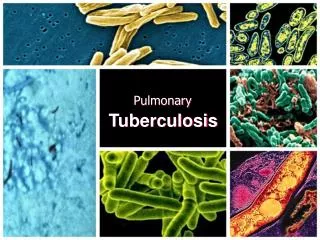
Pulmonary tuberculosis • TB • Chronic granulomatous infection of lung from Mycobacterium Tuberculosis • Leading cause of death in parts of Africa and Asia • Affects older people, HIV infected, immigrant populations (Hajj issue) • Spread by: • Inhalation of M. tuberculosis droplets (commonest) • Ingestion of spoiled food or milk • Inoculation of skin* • Transplacental (congenital)
Pathogenesis of tb • DESTRUCTION FROM HYPERSENSITIVITY reaction of host directed against bacterial wall constituents • Sequence • 1. 0-10 days,mycobacteria start inflammatory response. Neutrophilsphagozytose organisms, but cannot destroy them, so engulfed bacteria are drained into lymph nodes • 2. after 10 days: development of T cell mediated immune response (type IV hypersensitivity), to bacillary* cell wall results in cytokine release, leading to activation of macrophages> chronic inflammatory pattern, dominated by epitheliod cells which form GRANULOMAS • Central core of necrotic caseous tissue containing viable mycobacteria • Tuberculousgranulomas are termed TUBERCLES
Morphology of tb • Macroscopically: granulomas are pin sized white/gray tubercles in tissues • Microscopically: granulaomas are the histological hallmark of TB • Granuloma: central area of caseous necrosis, surrounded by 3 layers • 1st layer: activated macrophages (Langhans giant cells) • Middle layer: lymphocytes • Outer layer: fibroblastic tissue • Healing of granuloma is slow, with progressive fibrosis and calcification (CXR) • The central necrotic area may remain caseous and REACTIVATION results in secondary infection
Primary and secondary tb • Primary TB: 1st encounter with organism, resulting in development of small parenchymal focus, large lymph drainage • Secondary infection: reactivation of previously infected indvidual, results in large localized parencyymal reaction, minimal lymph node involvement
Neoplastic diseases of lung • Bronchogenic Carcinoma • Commonest cause of death from neoplasm in UK • >30,000 cases per year • Males more, 40-70 years peak • Risk factors • Cigarette smoking (early start-increased risk), decline if smoking stops • Occupational: asbestos*, nickel, radioactive material • Environmental: radon • Pulmonary fibrosis • Histological types (4) • 1. squamous cell carcinoma (50%) • 2. small cell carcinoma (oat cell, 20%) • 3. adenocarcinoma (20%) • Large cell anaplastic carcinoma (10%)