Understanding Microscopes: Types, Components, and Uses for Scientific Investigation
This chapter provides a comprehensive overview of various types of microscopes, including compound, comparison, stereoscopic, and scanning electron microscopes. Key components such as ocular lens, objective lenses, stage clips, diaphragms, and light sources are explained in detail. It discusses how each microscope functions and their specific applications, including the examination of translucent specimens and forensic analysis. Key concepts such as field of view, depth of focus, and optical characteristics are also clarified to understand magnification effects and practical usage in a laboratory setting.

Understanding Microscopes: Types, Components, and Uses for Scientific Investigation
E N D
Presentation Transcript
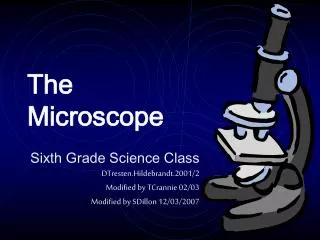
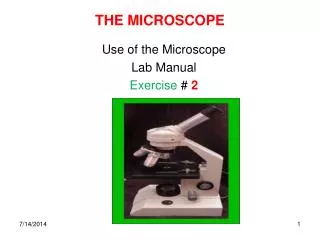
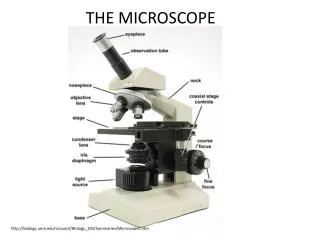
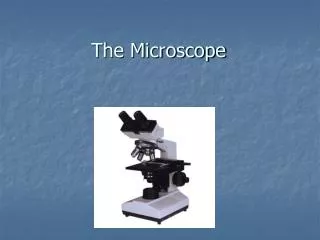
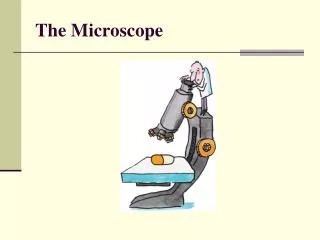
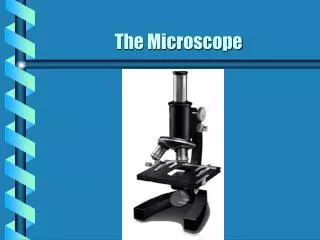
1. Ocular lens • 2.Revolving nosepiece • 3. Lower power objective • 4. Medium power objective • 5. High power objective • 6. Stage clips • 7. Diaphragm • 8. Light source (illuminator)
9. Eyepiece • 10. Arm • 11.Stage • 12. Coarse Adjustment • 13. Fine Adjustment • 14. Base
1. Ocular Lens: Lens within the eyepiece • 2. Revolving Nosepiece- contains the objective lens • 3. Objective Lenses: lens directly over specimen; low, medium and high power • 4.Stage- supports slide • Stage clips- secures slide on stage. • 5. Diapraghm (condenser)- focuses light on specimen
6. Light source (illuminator)- source of artificial light • 7. Arm: upright structure which supports microscope • 8. Base: Supports microscope • 9. Body tube: allows light can pass through to go to each lens • 10. Coarse Adjustment: focus an image under low power • 11. Fine Adjustment: focuses an image under medium and high power
Compound Light Microscope • How is it used? • Light passes through translucent specimen to view internal structures. • When is it used? • On translucent or thin specimens.
The Comparison Microscope How is it used? • Two independent objective lenses joined together by an optical bridge to a common eyepiece lens. • Can view two different items simultaneously When is it used? • Firearms examination • Trace evidence (hair, fibers, etc) THE MICROSCOPE
The Stereoscopic Microscope How is it used? • Two monocular compound microscopes • Three-dimensional image of a specimen • Use both eyepiece lenses When is it used? • Evidence not requiring very high magnification (10x–125x) • Microscopic examination of big, bulky items THE MICROSCOPE
The Microspectrophotometer How is it used? • Spectrophotometer coupled with a light microscope. • Can simultaneously obtain the visible absorption spectrum or IR spectrum of the material being observed When is it used? • Trace evidence, paint, fiber, and ink evidence. THE MICROSCOPE
The Scanning Electron Microscope How is it used? • (SEM) bombards a specimen with a beam of electrons instead of light • Produces a highly magnified image from 100x to 100,0000 • Depth of focus 300X better than optical systems at similar magnification • Bombardment of the specimen’s surface with electrons • Produces x-ray emissions • Characterize elements present in the material under investigation THE MICROSCOPE
When is it used? • Get a very magnified image
Important Terms • Field of View: area of specimen that can be seen after its magnified • Depth of Focus: thickness of specimen entirely in focus under microscope • Polarizer: devise that permits the passage of light waves vibrating in only one plain. • Parafocal: can change objective lens and field of view will remain in focus
Monocular: microscope with one eyepiece • Binocular: microscope with two eyepieces • Virtual Image: image that is magnified (cannot see it directly) • Real image: image seen directly
5. What happens to a compound microscopes field of view when you increase the magnification? • Field of view decreases • 6. When using a comparison microscope why is it important to closely match the optical characteristics? • Ensure both specimens are seen at equal magnification and with minimal but identical lens distortions. • 7. What is the most frequently used and versatile microscope found in the crime lab? List 3 reasons why this type is so widely used • Stereoscopic microscope because of wide field of view, great depth of focus, large working distance