
SlideServe
Menu
Préférences
© SlideServe · v2026

Financial Strategies Behind Big League Sports: Revenue, Contracts, and Community Impact

miller avatar
16 diapositives · 342 Views · Jul 12, 2014

This article explores the intricate financial dynamics of professional sports teams, emphasizing the correlation between a team’s success and its revenue potential. We delve into aspects like multimillion-dollar contracts, salary caps, and collective bargaining agreements that shape player negotiations. Moreover, we discuss how teams can be financial assets to cities through increased tourism and community development. Highlighting top team valuations and leading athletes, we unveil how corporate sponsorship, media rights, and local economic boosts interconnect with big league sports.
Financial Strategies Behind Big League Sports: Revenue, Contracts, and Community Impact - slide 1
01 / 16Financial Strategies Behind Big League Sports: Revenue, Contracts, and Community Impact
1 / 17

Télécharger la présentation

Financial Strategies Behind Big League Sports: Revenue, Contracts, and Community Impact
Une image / un lien ci-dessous est fourni (tel quel) pour télécharger la présentation

Politique de téléchargement : le contenu du site vous est fourni TEL QUEL pour votre information et votre usage personnel ; il ne peut être vendu, concédé sous licence ni partagé sur d’autres sites sans l’accord de son auteur.Le contenu vous est fourni TEL QUEL, pour votre information et votre usage personnel uniquement. Téléchargez la présentation en cliquant sur ce lien. Lors du téléchargement, si vous ne parvenez pas à télécharger une présentation, l’éditeur a peut-être supprimé le fichier de son serveur.Pendant le téléchargement, si vous ne parvenez pas à obtenir une présentation, le fichier a peut-être été supprimé par l’éditeur.

F I N

Plus de contenu associé

Transcription de la présentation
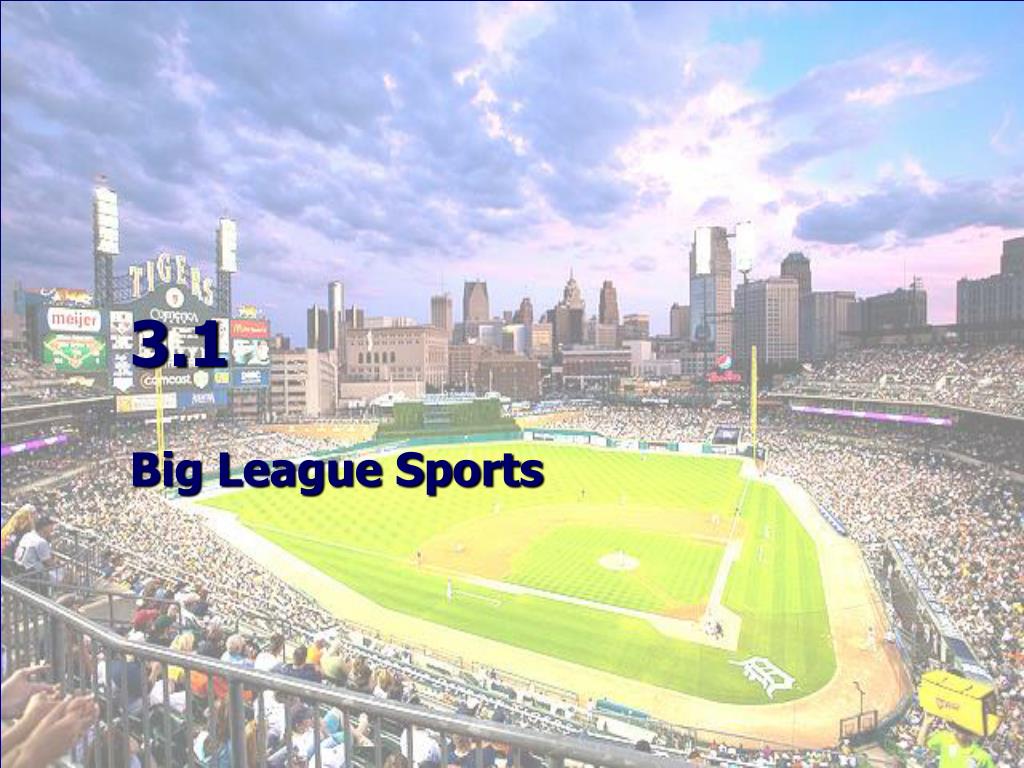
  1. 3.1 Big League Sports

  2. Financial Impact • Big league pricing and planning • “Big” refers to revenue potential – the better the team the more money they make • Must determine costs for multimillion dollar contracts – Better athletes=better ticket sales • Financial planning for a sports team • A sports team is a huge cost (stadium, facilities, etc) • Can bring in huge revenue – Must prove to the city • A professional team can be an asset to a city if:

  3. NFL’s Team Values 1) Dallas Cowboys - $2.3 bill. 2) New England Patriots - $1.8 bill. 3) Washington Redskins - $1.7 bill. 4) New York Giants - $1.55 bill. 5) Houston Texans - $1.45 bill. 28) Detroit Lions - $900 mill. 32) Oakland Raiders - $825 mill. http://www.forbes.com

  4. World’s Richest Athletes • Tiger Woods – $78.1 mill • Roger Federer - $71.5 mill • Kobe Bryant - $61.9 mill • LeBron James - $59.8 mill • Drew Brees - $51 mill • Aaron Rodgers - $49 mill • Phil Mickelson - $48.7 mill http://www.forbes.com/athletes/list/

  5. Big League Pricing & Planning • Professional athletes contracts • Must determine what the team can afford – better players = better team and more income • Corporate sponsorships • Must have financial backing from corporations to support activities • Television revenue • The better the team and fan following the more likely a tv network is to pick up the game

  6. Salary Caps • Are spending limits affecting how much a team can spend on a certain player • Give teams limits on player total player spending • May also affect individual player spending based upon factors such as years in the league and position • Are mandated and regulated by the governing bodies of major sporting leagues • Affect the National Football League®, National Basketball Association® and National Hockey League® • does not affect Major League Baseball® • Major League Baseball® is referred to as an “uncapped” league

  7. Collective Bargaining Agreements • Are contracts existing between the owners of a sport’s league and the player’s association • Contain rules for player salaries • Also contain requirements for salary caps • Free agency is the process by which players are assigned a team. When a player is a “free agent” they are free to negotiate with any team with whom they wish to sign. • Defines the rules for free agency

  8. Financial Planning for a Sports Team • A prof. sports team can be a financial asset to a city if • Everyone and everything involved with the team stays within the home city area • The stadium/arena is used for events other than those for which it was built • The team attracts other business development like hotels, restaurants, shops • Increased spending by fans • If a team can get fans to the city they will spend on hotels, restaurants, shops, etc. • Increased tax revenues

  9. Bringing All Resources Together • Media support • Marketing • Charitable and other organizations

  10. Power, Prestige, & Profitability • Perks and payoffs • Political clout • Professional teams and the community • Sociological ties to a professional team • The bottom line

  11. Perks & Payoffs • Perk—a payoff or profit received in addition to a regular wage or payment • Company employees receive tickets • Media exposure for owners • Houston Texans

  12. Political Clout • Franchise owners bring millions of dollars in business activity to a city • Often given money or other perks by city officials to entice team to stay in city • Nashville and the Tennessee Titans • Frequently associated with wealth

  13. Professional Teams & the Community • Teams bring new jobs to a city • Stadium construction, working games, other tourist businesses created (hotels, restaurants, etc.) • Boost for surrounding businesses • City of Detroit and Tigers playoff run • Community service – team and coaches help out community in various ways

  14. Sociological Ties to a Professional Team • City’s “image enhancement” • Residents feel pride • Ex. - Pittsburgh Steelers, Detroit Lions, New York Yankees, Denver Broncos • Wholesome family entertainment

  15. The Bottom Line • Winning is everything in sports • Special contract incentives for winning

  16. Incentives can be….. • Can mean different things to different parts of a professional sports organization • Owner’s generally find success in making money • Managers or coaches measure success in winning • Players find success in winning and reaching certain statistical milestones paying them bonuses • for example, a soccer player may have incentives, or motivators, in his contract to score more goals • Front office personnel such as marketing or public relations might measure success based on fan attendance