Hydrophytic Vegetation
This overview explores the characteristics of hydrophytic vegetation and hydric soils essential for wetland ecosystems. Hydrophytic vegetation is defined by layers including trees, shrubs, herbaceous plants, and vines, with over 50% of dominant species classified as obligate (OBL), facultative wetland (FACW), or facultative (FAC). The presence of hydric soils is contingent upon conditions of saturation, flooding, or ponding that create anaerobic environments. Key criteria include organic content, high water tables, and distinctive soil characteristics crucial in determining wetland health.

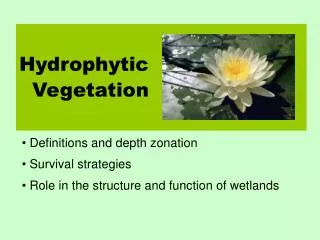
Hydrophytic Vegetation
E N D
Presentation Transcript
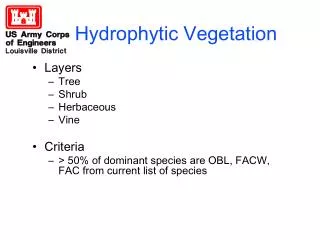
Hydrophytic Vegetation • Layers • Tree • Shrub • Herbaceous • Vine • Criteria • > 50% of dominant species are OBL, FACW, FAC from current list of species
Hydrophytic Vegetation • Prevalence = Dominant • Basal area (trees) • Aerial cover (herbs) • Typically adapted • Frequency of occurrence in wetland areas • Obligate: >99 % • Facultative wetland: >67% to 99% • Facultative: 33% to 66% • Facultative Upland: 1% to <33 % • Upland: < 1%
Hydric Soils • A hydric soil is a soil that formed under conditions of saturation, flooding, or ponding long enough during the growing season to develop anaerobic conditions in the upper part.
Hydric Soils • Four broad criteria: • Organic soils • Mineral soils with high water tables • Ponded soils • Flooded Soils
Hydric SoilsDevelopment Inundation or soil saturation Anaerobic conditions Chemical reduction (Fe, Mn, etc.) Distinctive soil characteristics
Hydric Soils • Hydric soil criteria (Non-sandy soils) • Organic soils • Histic epipedon • Sulfidic material • Aquic moisture regime • Reducing soil conditions • Soil colors • Hydric soils list • Iron and manganese concretions
Soil Color Munsell Color Chart Measured immediately below the A-horizon or at 10 inches, whichever is shallower Matrix chroma of 2 or less in mottled soils Matrix chroma of 1 or less in unmottled soils Hydric Soils