Understanding European Imperialism (1870-1914): Causes, Methods, and Impacts
110 likes | 234 Vues
This overview explores European imperialism between 1870 and 1914, defining it as the domination of one country's political, economic, or cultural life over another. It analyzes the motivations behind European expansion, including the influence of the French and Industrial Revolutions, the search for new markets and raw materials, and the desire for humanitarian outreach. The document also discusses the methods of control employed by imperial powers, including direct and indirect rule, and the outcomes of imperialism, such as increased literacy and infrastructure development alongside significant disruptions to local cultures.


Understanding European Imperialism (1870-1914): Causes, Methods, and Impacts
E N D
Presentation Transcript
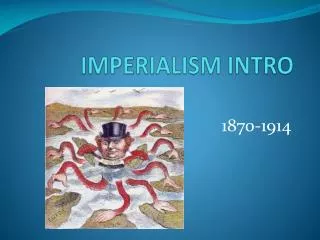
IMPERIALISM INTRO 1870-1914
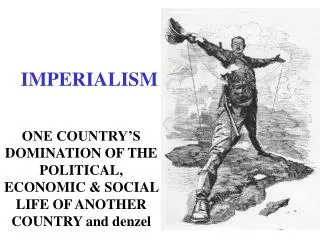
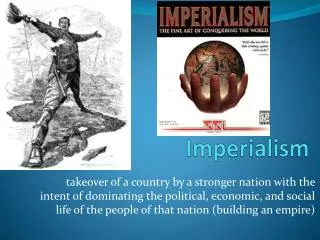
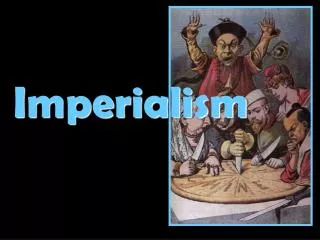
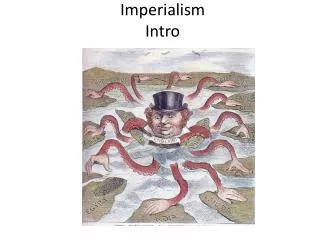
DEFINITION The domination by one country of the political, economic or cultural life of another country/territory
WHY DID EUROPEANS THINK IT WAS IMPORTANT TO CONQUER OTHER COUNTRIES? • 1400-1600: European nations sponsor missions of exploration (Gold, Glory & God) • Establish colonies in the Americas & trade outposts in Asia & Africa (wealth & trade) • Christian missionary efforts (knowledge of people & geography maps)
WHAT DID FRENCH REVOLUTION & INDUSTRIAL REVOLUTION HAVE TO DO WITH IT? • French Revolution nationalism & political competition • Industrial Revolution greater wealth, economic strength & technological advancements demand for natural resources & new markets • Attitude of superiority begins
WHAT WERE EUROPEANS LOOKING FOR FROM THESE COUNTRIES? • Industrial needs (rubber, petroleum, manganese, timber) • Expand markets (buyers for products) • Invest in undeveloped regions b/c cheap labor • Outlet for growing European population
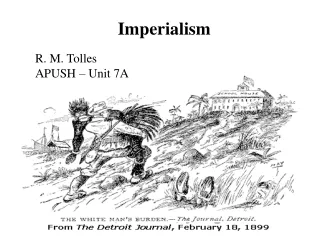
WHAT WAS HAPPENING AS A RESULT OF IMPERIALISM? • BALANCE OF POWER– if one country seizes control of land, then another country rushes in to gain control nearby • Humanitarian goals - share God’s word & spread industry to improve the lives of non-Europeans (Social Darwinism)
WHY WAS EUROPE SUCCESSFUL IN THIS QUEST? • Technology – Maxim machine gun, repeating rifles, steam-driven ships (military, communication & travel) • Advancements in medical knowledge (quinine for malaria) • Economic & political strength added to ability to hold control over land & people in other parts of the world • Diversity of African languages, tribal customs, loyalty, & ethnic groups & traditional warfare over land, water & trade rights disunity among African people (similar to indigenous American tribes)
CAUSES AND OUTCOMES CAUSES • Industrial Revolution/French Revolution • New markets to sell goods • Search for raw materials/natural resources • Racism/Superiority OUTCOMES • Decreased local warfare/breakdown of traditional cultures • Boundaries dividing people • Loss of population from disease & unsuccessful resistances • 2 positive increased literacy & improved infrastructure
COLONY • Group of people who leave their native country to form a settlement in a new land, still in connection to their mother country • DIRECT RULE officials sent from “mother country” to rule people directly & impose culture, language, politics, & economics • France, Germany, Belgium
PROTECTORATE • Local rulers are left in place, but accept advice regarding trade, industry, politics, & missionaries • INDIRECT RULE use of local sultans, chiefs, & rulers to administer laws & codes of “mother country”; encouraged education & cooperation to prepare for future of independence • Britain and US
SPHERE OF INFLUENCE • Area in which an outside power claims exclusive investment & trading/economic privilege