Understanding the Scientific Method and Key Biological Concepts
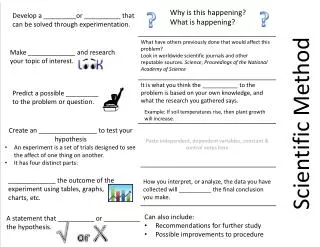
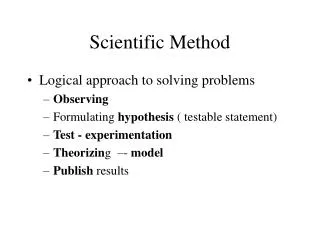
This guide explores the scientific method, including observation, hypothesis formation, experimental design, and result analysis. Key biological concepts such as evolution, heredity, homeostasis, and metabolism are defined, emphasizing their significance in the life sciences. Essential terminology covers reproduction, ethics, gravity, and control groups, highlighting the importance of maintaining safety in laboratory settings. Familiarity with the International System of Units (SI) and safety measures is critical for scientific endeavors. Study effectively for your upcoming test!

Understanding the Scientific Method and Key Biological Concepts
E N D
Presentation Transcript
SI or Metric System • Uses liters, meters and grams as base units
Vocabulary • Evolution - The process by which traits passed from parents to offspring change over time. • Heredity – the process by which parent pass traits to their offspring. • Homeostasis – the maintenance of stable internal conditions despite changing external conditions. • Metabolism – the sum of all chemical reactions carried out in an organism.
Vocabulary • Reproduction – the process by which organisms make more of their own kind. • Ethics – moral principals. • Gravity – all objects in the universe are subject to gravity. • Control group – a group that serves as a standard of comparison in an experiment. a controlled experiment is conducted to test an hypothesis.
Science Lab Safety • Use sunscreen • Use proper safety equipment • Pay attention to what you are doing • Pay atten • tion to your • body and clothing
Biology • Study of plants = botany • Study of animals = zoology