Comprehensive Disaster First Aid: Essential Techniques and Triage for Life-Threatening Injuries
Master vital disaster first aid techniques to save lives during critical situations. Identify key life-threatening conditions, including airway obstruction, severe bleeding, and shock. Learn effective methods to open airways, control bleeding, assess fractures, and treat burns. Understand the phases of trauma death, and the importance of timely intervention. This guide also covers public health considerations, wound care, and triage methodologies to prioritize victims based on injury severity. Equip yourself with skills that can make a crucial difference in emergencies.

Comprehensive Disaster First Aid: Essential Techniques and Triage for Life-Threatening Injuries
E N D
Presentation Transcript
Disaster First Aid 1. Identify the “killers.” 2. Apply techniques for opening airways, controlling bleeding, and treating for shock. 3. Fractures/ Splinting 4. Burns 5. Head-to-Toe Assessments
Public Health Considerations • The primary public health measures include: • Maintaining proper hygiene – wearing protective gloves • Maintaining proper sanitation • Purifying water if necessary
Disaster First Aid • There are 3 phases of death from trauma: • Phase 1 – Death within minutes • Phase 2 – Death within several hours • Phase 3 – death in several days or weeks Phases 1 & 2 should be identified immediately
Treatment of Life-Threatening Conditions The “Killers”: • Airway obstruction • Excessive bleeding • Shock
Opening the Airway • Check for unresponsiveness • Place palm of one hand on forehead • Place two fingers of other hand under the chin* tilt chin upward while tilting head back slightly • Place ear over victim’s mouth, looking toward victim’s feet • Look, Listen & Feel for breathing
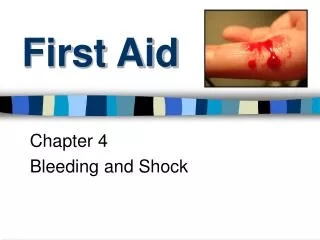
Controlling Bleeding • Place direct pressure over the wound by putting a clean dressing over the wound and pressing firmly • Maintain pressure on the dressing over the wound by wrapping firmly with a pressure bandage • If needed, elevate wound above the level of the heart • Pressure Points are last resort
Treating Impaled Objects Impaled Objects: • Immobilize. • Don’t move or remove. • Control bleeding. • Clean and dress wound. • Wrap.
Treating Amputations • Control bleeding • Treat for shock • Save tissue parts, wrapped in clean cloth • Keep tissue cool • Keep tissue with the victim
Wound Care • Control bleeding • Prevent secondary infection • Clean wound—don’t scrub • Apply dressing and bandage
Signs of Shock • Signs Include: • Rapid & Shallow Breathing • Capillary Refill of greater than 2 seconds • Failure to follow simple commands • Changes in skin color
Treatment & Prevention of Shock • Lay victim on back • Elevate feet 10-12 inches above level of heart • Maintain open airway • Control obvious bleeding • Maintain body temperature
Indicators of Injury • Bruising • Swelling • Severe pain • Disfigurement Provide immediate treatment for life-threatening injuries!
Treating Fractures, Dislocations, Sprains, and Strains • Objective: Immobilize the injury and joints above and below the injury. • If questionable, treat as a fracture.
Treating an Open Fracture • Do not draw exposed bones back into tissue. • Do not irrigate wound.
Treating an Open Fracture DO: • Cover wound. • Splint fracture without disturbing wound. • Place a moist 4" x 4" dressing over bone end to prevent drying.
Guidelines for Splinting • Support the injured area. • Splint injury in the position that you find it. • Don’t try to realign bones. • Check for color, warmth, and sensation. • Immobilize above and below the injury.
Classification of Burns • First degree • Second degree • Third degree
Treating Burns • Cool the burned area. • Cover to reduce infection.
Head-to-Toe Assessment • Head • Neck • Shoulders • Chest • Arms • Abdomen • Pelvis • Legs • Back
Triage • Do the most good for the most people in the shortest amount of time • Sort people into triage categories • Immediate • Delayed • Minor • Dead
Triage Assessment • Compound Fracture, Left femur • Respirations over 30/min • Radial pulse present • Awake IMMEDIATE
Triage Assessment • 90% Second Degree burns • Respirations none (Repositioned airway twice) • Radial pulse present • Unconscious DECEASED
Triage Assessment • Impaled stick in arm • Respirations under 30/min • Capillary refill under 2 sec. • Awake • Walked to you MINOR
Triage Assessment • Unable to move legs • Respirations under 30/min • Radial pulse present • Awake and Alert DELAYED
Triage Assessment • Amputated left arm, bleeding controlled • Respirations under 30/min • Capillary refill under 2 seconds • Awake DELAYED
Triage Assessment • Bruise on forehead, blood in ears and nose • Respirations under 30/min • Radial pulse present • Awake and but unable to focus their attention. IMMEDIATE