Suborbital Flight Characterization Design for UP Aerospace Rocket by U of MN Senior Design Team
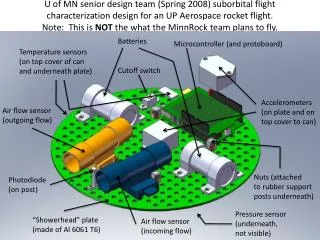
In Spring 2008, the Senior Design Team at the University of Minnesota developed a comprehensive design for characterizing suborbital flights aimed at UP Aerospace. This project involved creating a system utilizing various sensors including temperature sensors, accelerometers, and pressure sensors, strategically placed on both the can's top cover and underneath plates. The design also integrated batteries, a microcontroller, and air flow sensors to measure outgoing and incoming flow. The aim was to gather crucial data for optimizing rocket performance and safety during suborbital missions.

Suborbital Flight Characterization Design for UP Aerospace Rocket by U of MN Senior Design Team
E N D
Presentation Transcript
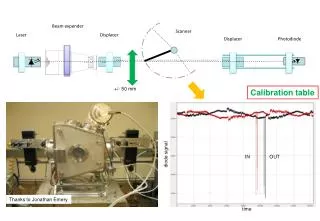
U of MN senior design team (Spring 2008) suborbital flightcharacterization design for an UP Aerospace rocket flight.Note: This is NOT the what the MinnRock team plans to fly. Batteries Microcontroller (and protoboard) Temperature sensors (on top cover of can and underneath plate) Cutoff switch Accelerometers (on plate and on top cover to can) Air flow sensor (outgoing flow) Nuts (attached to rubber support posts underneath) Photodiode (on post) Pressure sensor (underneath, not visible) “Showerhead” plate (made of Al 6061 T6) Air flow sensor (incoming flow)