VO Services Project WBS
100 likes | 226 Vues
This document presents an overview of the VO Services Project (Privilege Project) aimed at establishing a robust infrastructure for user registration and fine-grained authorization for accessing computing and storage resources. Developed collaboratively by stakeholders like CMS, Fermilab, and CERN, it highlights important components including GUMS and VOMRS. Key aspects discussed include current WBS efforts to reduce administrative overhead, enhance system health reporting, improve functionality validation, and ensure better integration with existing technologies. Future challenges and roadmap implications are also detailed.


VO Services Project WBS
E N D
Presentation Transcript
VO Services Project WBS Dec 14, 2006 OSG Executive Board Meeting Gabriele Garzoglio Computing Division, Fermilab Gabriele Garzoglio
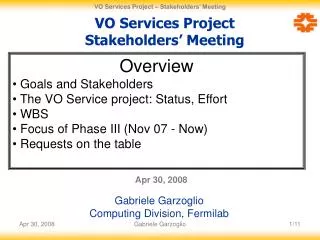
Overview • VO Services Project (aka Privilege Project) • Charter • WBS • Conclusions Gabriele Garzoglio
Project Charter • The project provides an infrastructure to manage user registration and implement fine-grained authorization to access rights on computing and storage resources. • Authorization is linked to identities and extended attributes. Mapping is dynamic and supports pool accounts. Enforcement of access rights is implemented using UID/GID pairs. • The infrastructure aims at reducing administrative overhead. Authorization service is central at the site. • The project is responsible for the development and maintenance of the infrastructure and for assisting with the deployment and support on the OSG. Gabriele Garzoglio
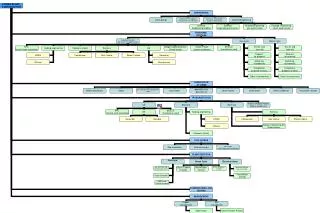
WBS • The WBS was put together in late spring • Requirements come from the stakeholders, including CMS, Fermilab, CERN • WBS reflects work on • Internal components (PRIMA, GUMS) • Related components (gPlazma, gLexec) • Recent additions (VOMRS as of Sep 06) • SAZ is logically part of VO Services, but is managed by Fermigrid Gabriele Garzoglio
WBS - 1 • Support and deployment(Ongoing ~25% FTE internal support)(Support need will grow with deployment) • Support the PRIMA and GUMS code for 32/64 bits for GT2 and GT4 for CMS Tier 1&2. Provide best effort support for all OSG VOs. (In the past 10% effort by Vikram) • Support “stable” VOMRS release for Fermilab, CERN, and OSG stakeholders Ongoing. (In the past: 15% Tanya , 10% external (CERN) support) • Help deploy the infrastructure to stakeholders’ sites. Ongoing (TBD) Gabriele Garzoglio
WBS - 2 • Improve health status reporting for key servers (Started. Remaining effort TBD) • Better Gatekeeper / Prima error reporting for authorization failures (effort TBD) • VOMS/GUMS health monitors (Done Aug 06) • Improve software validation (8 FTE weeks) (Started) • Improve validation of basic functionalities (framework available in VDT) • Implement validation of software dependencies • Measure PRIMA / GUMS scalability (Started by John W.) • Improve integration of the infrastructure with dependent components as needed (Started) • Improve GUMS integration with MonALISA (Started) Gabriele Garzoglio
WBS - 3 • Improve robustness of GUMS (Started) • Fix GUMS memory management problems (3 FTE weeks) (Done at FNAL Sep 06) • Improve GUMS configuration management (3 FTE weeks) (Started in Oct @ BNL) • Investigate redundant servers configuration (2 FTE weeks – was 3 FTE days) (Started) • Improve GUMS usability (Started) • Improve pool account management (1 FTE week) (Started in Oct @ FNAL) • Implement history log querying interface (2 FTE week) (Not started) Gabriele Garzoglio
WBS - 4 • gPlazma integration with DCache and deployment (EXTERNAL) (Started) • Integrate gPlazma-enabled authorization classes with DCache doors (Done Aug) • Validate DCache / gPlazma integration (Done Sep 06) • Deploy gPlazma-enabled DCache (Started Sep 06 at Tier 1- suspended in Oct for CSA 06) • Integration of gLexec with PDP (8 FTE week: Done Oct 06) Gabriele Garzoglio
WBS - 5 • VOMRS: implementation of “vital” features for stakeholders • Define roadmap for long-term future (TBD) • Interact with Globus (Security model, XACML PRIMA-equivalent, CAS, etc.) • Interact with EGEE (possible collaboration on GUMS) • VOMRS long-term future • Outreach (Ongoing) • Understanding Requirements from new VOs and groups (e.g. LIGO) Gabriele Garzoglio
Conclusions • The privilege infrastructure provides role-based fine-grained authorization for access to grid-enabled resources. • It is used on the OSG by US CMS, US ATLAS, et al. • Our current focus is to improve operations by improving robustness, usability, and validation processes • Challenges include reliability of effort available, interactions with external groups, and defining the roadmap for the future. Gabriele Garzoglio