Enhancing Foreign Direct Investment in the Philippines: Policies, Trends, and Challenges
This presentation outlines the current state and performance of Foreign Direct Investment (FDI) in the Philippines, detailing policy frameworks and incentive programs that attract foreign capital. It reviews trends in FDI distribution by sector and shares insights from the Foreign Investment Acts of 1991 and 1996, including restrictions and reforms. Key issues such as competition for FDI, tax incentives, and macroeconomic stability are discussed to highlight areas for improvement in the country's investment climate.

Enhancing Foreign Direct Investment in the Philippines: Policies, Trends, and Challenges
E N D
Presentation Transcript
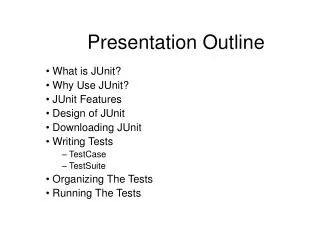
Presentation Outline • FDI policy • Investment incentive program • FDI trends & distribution by sector • FDI performance
FDI policy reforms Foreign Investment Act 1991 List A reserved for Filipinos due to Constitutional constraints: mass media, cooperatives, small-scale mining reserved for Filipinos due to health, defense, & moral reasons; protection of SMEs List B List C areas where adequate number of firms exist to serve the economy
FDI policy reforms Foreign Investment Act 1996 • retail trade liberalization (March 2000) allows 100% FDI with minimum equity US$7.5million • Foreign Bank Liberalization (1994): 10 new foreign banks • rural banking completely closed to FDI • restrictions on licensed professions, pyrotechnics & firecrackers; ceilings on financing, advertising, domestic air transport, commercial deep sea fishing List A List B • restricts to 40% FDI in firms engaged in national security, defense, public health & safety & non-export firms with less than US$200,000 capital
Remaining FDI restrictions • Land ownership - lease for 50 years, renewable once for another 25 years • BOT projects - foreign ownership limited to 40% • Omnibus Investments Code - for incentives linked with export performance, export requirements for foreign firms are higher (70%) than domestic firms (50%)
Tax & other fiscal incentives to FDI FDI Incentive Regimes Subic Bay Metropolitan Administration Clark Development Corporation Board of Investments Philippine Export Processing Zone • 1987 Omnibus Investments Code • 1995 Special Economic • Zone Act • 1972 Export Processing Zone Authority • 1993 Clark Development Corporation • 1992 Bases Conversion & Development Act
FDI Incentives National & local taxes: gross receipts tax, VAT, ad valorem, excise, real property tax Allowable deductions: direct salaries, wages, production supervision salaries, raw materials, supplies & fuels, goods in process, depreciation, rent, utility charges, financing charges
FDI as % of GDP Average FDI/GDP 0.54% 1980s 1.21 1990s 1.7 20s
FDI Distribution 50 45 34 32 31 11 15 18 6 0.9 12 8 8 5 3 6 5 1 Food mfg 9% 15% Mfg: electronic components assembly, food, transport, chemicals, petroleum & coal, basic metal Public Utilities: telecommunications
FDI Sources 56 25 21 22 22 15 12 12 5 8 6 6 6 7 5 3 4 5 3 2 0.5
Competitiveness Indicators:Country Rankings Source: World Economic Forum, Global competitiveness Report, 2003-2004 (102 countries) Macro: macro stability, country credit risk, wastage in government expenditures Public institution: enforcement of contracts & law, degree of competition
Cost of Doing Business Indicators Source: World Bank, World Development Indicators, 2004.
Utility costs Source: MIGA & World Bank, FDI Competitiveness in Asia, 2004.
Real estate costs Source: MIGA & World Bank, FDI Competitiveness in Asia, 2004.
Corporate tax rate Source: The Economist Intelligence Unit (2004)
Tax Incentives:Selected SE Asian Countries Sources for Malaysia, Thailand, Indonesia, & Vietnam: Chalk (2001) & PWH Coopers (2001) as cited in Fletcher (2002)
ADB-WB Survey in the Philippines: major constraints to business General Findings (domestic & foreign firms) • Macro instability • Corruption • Electricity • Tax rates Foreign firms • Customs regulations • Telecommunications • Labor regulations • Crime • Labor skills
Broad Conclusions • FDI liberalization & changes in incentive policy crucial in FDI improvements • Competition for FDI resulted in a complex investment incentive system • Overall FDI performance has lagged behind the country’s neighbors • Tax incentives were not able to compensate for the relatively weak fundamentals and poor investment climate