Understanding Passive Voice in Latin: An Overview of New and Old Forms
This guide explores the concept of passive voice in Latin, contrasting it with active verbs. You'll learn through practical examples how to identify and use passive forms, such as "clamor a puero auditur" (the shout is heard by the boy) and "vinum a ancilla fundebatur" (wine was being poured by a slave girl). We will cover verb parsing, focusing on voice, person, number, tense, and mood. Enhance your Latin skills by mastering the nuances of passive construction in both contemporary and classical contexts.

Understanding Passive Voice in Latin: An Overview of New and Old Forms
E N D
Presentation Transcript
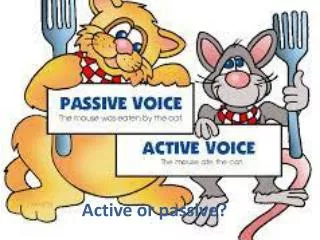
New and Old • You have seen active verbs: • puerclamorem audit. The boy hears the shout. • ancillavinumfundebat. The slave girl was pouring wine. • Now, in stage 29, you have seen passive verbs. • clamor a pueroauditur. • The shout is heard by the boy. • vinumabancillafundebatur. • Wine was being poured by a slave girl.
Examples • cena nostra a coquonuncparatur. • coquuscenamnostramnuncparat. • multascelera in hacurbecotidiecommittuntur. • laudantur; rogatur; mittuntur • candidatiabamicissalutabantur • amicicandidatossalutabant. • fabulaabactoribus in theatroagebatur. • audiebantur; laudabatur; necabantur; tenebatur
Parsing a verb Now when we parse a verb we will list a voice: active or passive person- 1st,2nd or 3rd number- singular or plural tense- present, imperfect, ect. voice- active or passive mood- indicative or subjunctive tenebatur- 3rd person, singular, imperfect, passive, indicative.