Chromosome Breakdown
This article explores the extent of genetic inheritance's influence on behavior, drawing on research studies like Caspi et al. (2003) which investigated the impact of the 5-HTT gene on depression following stressful events. We also examine twin studies, notably Bouchard et al. (1990), to highlight the genetic underpinnings of intelligence. The findings indicate significant genetic contributions to both mental health and cognitive ability but also emphasize the role of environmental factors in shaping behavior. This complex interplay between genes and environment continues to stimulate research in psychology.

Chromosome Breakdown
E N D
Presentation Transcript
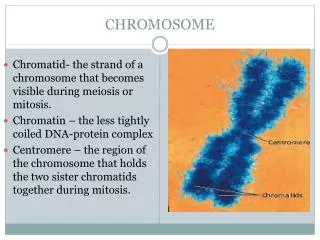
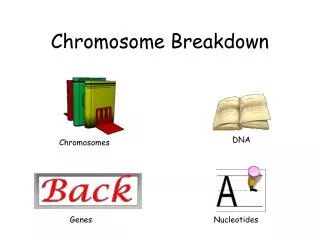
Chromosome Breakdown DNA Chromosomes Genes Nucleotides
With reference to relevant research studies, to what extent does genetic inheritance influence behavior?
Gene Mapping • Some scientists are trying to determine the effect of a particular gene on behavior such as temperaments or psychological disorders.
Caspi et al. (2003)The role of the 5-TT gene in depression after stressful events. • Longitudinal Study (vs Cross Sectional) • The 5-TT gene influences the level of serotonin, which is known to play a role in mood.
Caspi et al. (2003)The role of the 5-TT gene in depression after stressful events. • There are two types of 5-HTT genes. • Long- a little over 50% of population • Short- a little less than 50% • The researchers compared participants with normal 5-HTT (long) genes with shorter alleles. • Specifically after stressful events.
Caspi et al. (2003)The role of the 5-TT gene in depression after stressful events. Results • After stressful events, the participants with the shorter 5-TT gene were more likely to become depressed. • The 5-TT gene could indicate vulnerability to depression.
Caspi et al. (2003)The role of the 5-TT gene in depression after stressful events. Evaluation • Since so many people carry it (almost half the population), it is hard to say that in is the gene that made the difference. • Maybe it was the environmental factors (stressful events) that caused the depression. • Did not show a cause-effect relationship.
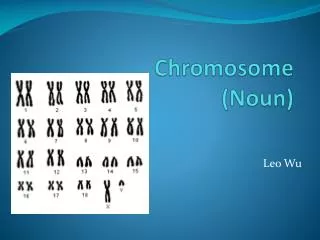
Chromosomal Abnormalities • Gender comes from 23rd pair of chromosomes…men have XY…woman have XX. • Turner’s syndrome is single X. • Klinefelter’s syndrome is extra X…XXY • XYY- Super male
Let’s take a better look at Twins…. • Monozygotic Twins (MZ or identical) come from the same sperm and egg and share 100% of there genes. • Dizygotic Twins (DZ or fraternal) come from two different eggs and share about 50% of their genes. • Regular siblings also share around 50% of their genes.
Twins In twin studies, researches focus on something called a concordance rate… • The probability that if one individual has the trait the other will also have it. • It tells us if a trait is inherited. Schizophrenia Fraternal Twins: 15% Identical Twins: 50%
Usually in twin studies, one twin acts as a control for the other twin. • In good twin research sets of MZ are compared to sets of DZ for a trait of disorder. • High concordance rates with MZ and lower with DZ indicates the trait is due to genes (inherited). • Differences within pairs of MZ are thought to be environmental factors.
Bouchard et al. (1990)Twin study investigating genetic inheritance in intelligence • This study used a self-selected sample of MZ twins who had been reared together (MZT) and MZ twins who had been reared apart (MZA). • Looked at a lot of factors but we will focus on intelligence.
Bouchard et al. (1990)Twin study investigating genetic inheritance in intelligence Results: • Used the WAIS to measure intelligence. • The concordance rates for MZA was 69%, for MZT it was 88%.
Bouchard et al. (1990)Twin study investigating genetic inheritance in intelligence • The researchers concluded that environmental factors do play a role in development of intelligence but IQ is to a large extent inherited. • 70% of the observed variation in the sample could be attributed to genetic variation.
Bouchard et al. (1990)Twin study investigating genetic inheritance in intelligence • They claim that in their sample (white, middle class, industrialized nation) genetic inheritance in IQ accounts for around 2/3 of observed variance of IQ. • They also said that their findings do not indicate that IQ cannot be increased by environmental factors.
Bouchard et al. (1990)Twin study investigating genetic inheritance in intelligence Evaluation • Correlational data cannot establish cause/effect relationships. • Concordance rates were high, but far from 100%. • No control for the effect of environmental variables. • Self-selected sample.