Download
1 / 27
270 likes | 389 Vues
Explore the multifaceted causes and significant events that led to World War I. This comprehensive overview delves into the underlying factors such as alliances, nationalism, imperialism, and militarism, culminating in the assassination of Archduke Franz Ferdinand. It further examines the role of major nations, the impact of American neutrality, and the eventual shift toward involvement. The aftermath addresses the challenges faced during peace negotiations, including the Treaty of Versailles. Gain insights into the complexities of this pivotal historical event.

E N D
Causes of the War: 200 Question: An agreement between at least two countries to defend one another. Answer Alliance Back
Causes of the War: 400 Question: Loyalty and devotion to one’s country or ethnic group Answer: Nationalism Back
Causes of the War: 600 Question: When a strong nation dominates and exploits a weaker nation it is called: Answer: Imperialism Back
Causes of the War: 800 Question: The policy of building up your armed forces to prepare for war and glorify your country is called: Answer Militarism Back
Causes of the War: 1000 Question: The immediate cause of WWI was: Answer The assassination of the Archduke Franz Ferdinand Back
War in Europe : 200 Question: Austria-Hungary’s attack on this country began the war: Answer Serbia Back
War in Europe : 400 Question: Germany, Austria-Hungary, and ____________ were known as the Central Powers Answer: The Ottoman Empire Back
War in Europe : 600 Question: Germany’s attack on this country brought France and Great Britain into the war: Answer Belgium Back
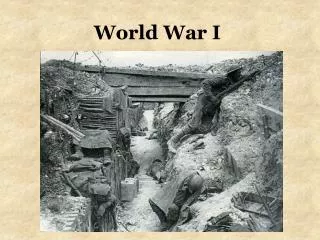
War in Europe : 800 Question: The Western Front saw primarily this type of fighting: Answer: Trench Warfare Back
War in Europe : 1000 Question: This plan called for Germany to invade Belgium and stage a massive attack on France to knock them out of the war Answer: The Schlieffen Plan Back
American Neutrality: 200 Question: U.S. President during World War I Answer: Woodrow Wilson Back
American Neutrality: 400 Question: The sinking of this passenger liner helped spur American support of the war: Answer: RMS Lusitania Back
American Neutrality: 600 Question: What was the Zimmerman Note? Answer: Telegram from Germany to Mexico proposing an alliance and that Mexico attack the U.S. to keep the U.S. out of WWI and win Mexico back lost lands Back
American Neutrality: 800 Question: Why did the U.S. actually support the Allies more than the Central powers even though we were neutral? Answer: U.S. companies have loaned FAR more money to the Allied countries and are worried about being paid back Back
American Neutrality: 1000 • Question: How did Wilson try to convince the American people that neutrality would be beneficial to the U.S.? • Answer: We could sell goods to both sides and make a large profit Back
Home Front: 200 Question: How did the U.S. quickly increase the size of the army? Answer: The Selective Service Act Back
Home Front: 400 Question: How did the US raise most of the money needed for the war effort? Answer: Sale of war bonds Back
Home Front: 600 Question: This regulated the US economy and made sure mass production was successful: Answer: War Industries Board Back
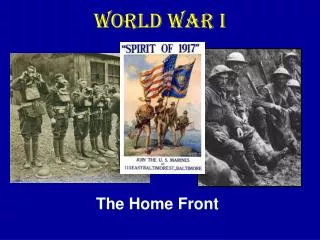
Home Front: 800 Question: How did the U.S. try to convince people to support the war effort? Answer The Committee on Public Information created propaganda Back
Home Front: 1000 Question: This court case decided that freedom of speech does not always apply: Answer: Schenck v US Back
Peace: 200 Question: Who were the “Big Four?” Answer: Great Britain, France, United States, and Italy Back
Peace: 400 Question: U.S. plan for peace terms: Answer: Wilson’s Fourteen Points Back
Peace: 600 Question: Which section of the Treaty was the most objectionable to the German people? Answer: The War Guilt Clause Back
Peace: 800 Question: What were the four major problems that had to be dealt with after the end of WWI? Answer Debt, military threats, territorial disputes, blame Back
Peace: 1000 Question: Why did the U.S. Senate not approve membership in the League of Nations? Answer: They did not want to be obligated to become involved in Europe’s affairs in the future after the horrors of WWI Back