70 likes | 203 Vues
This document explores the Imperial Debate in the wake of the Spanish-American War, highlighting significant amendments and policies that shaped U.S. foreign relations from 1898 to 1914. It discusses the Teller and Platt Amendments, U.S. territorial acquisitions like Hawaii and Puerto Rico, and engagement in the Philippines. The document also details America's involvement in China and Latin America, including the Panama Canal's construction and the Roosevelt Corollary's emphasis on Dollar Diplomacy. This period reveals the complex dynamics of U.S. imperialism and its impact on diplomatic relations.
E N D
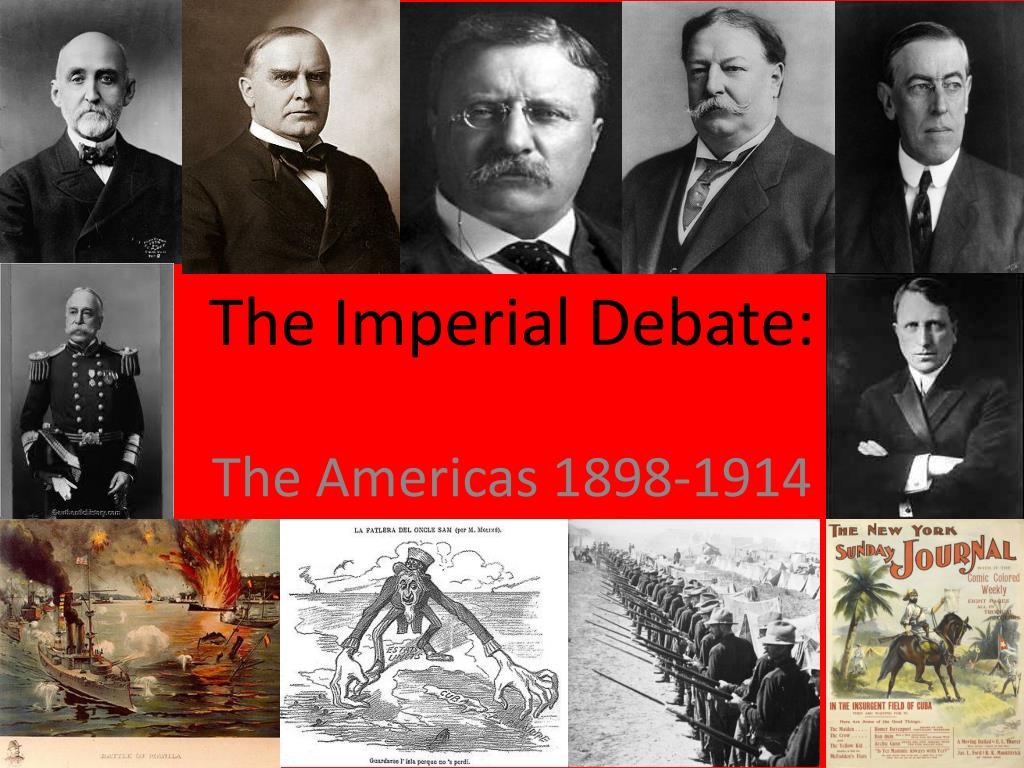
The Imperial Debate: The Americas 1898-1914

Sp/Am War Aftermath:The Imperial Debate • Teller Amendment (1898)- United States will not establish permanent control over Cuba • US sugar, tobacco, fruit companies invest heavily, buy huge tracts of land • Platt Amendment (1901)- Forbids Cuba to enter into any other foreign treaties • US may intervene militarily / lease land for bases • Part of Cuban constitution despite protests
Sp/Am War Aftermath:The Imperial Debate • Hawaii/Puerto Rico annexed summer of 1898 • Philippines (narrowly) annexed in 1899 • Guerilla war lasts until 1901 • Location key to trade in China • Secretary of State John Hay proclaims an “open door” to China to European powers • US helps put down ‘boxer rebellion’ • China divided into ‘spheres of influence’
Sp/Am War Aftermath:The Imperial Debate • US purchases rights to build Panama Canal • $10 mil for rights PLUS $250,000 per year for 100 years • Columbian senate rejects, Panamanians revolt • U.S. sends warships as a signal to Colombians • Panamanian independence established, canal is completed by 1914
Sp/Am War Aftermath:The Imperial Debate • European capital still flooding into Latin America – loans and debt rise • In 1901, German, British, Italians blockade Venezuela over debts • Roosevelt Corollary to the Monroe Doctrine • US has power to manage foreign debt of all countries in the hemisphere
Sp/Am War Aftermath:The Imperial Debate • Roosevelt Corollary implementation becomes known as ‘Dollar Diplomacy’ during Taft • An effort to replace military might with financial know how • Sparks resentment in Latin America – various responses • Honduras – U.S. ‘sponsored’ revolution • Nicaragua – rejects DD, U.S. companies acquire banking and railroads
Sp/Am War Aftermath:The Imperial Debate • Woodrow Wilson elected in 1912 – denounces Big Stick diplomacy • Idealism of Wilson’s “moral diplomacy” • U.S. will offer a model to the world based on Constitutional principles and Christian morality • Leads to military intervention in Mexico, Hispanola, Chile