The Egg Experiment: Discovering the Effects of Vinegar on Eggshells
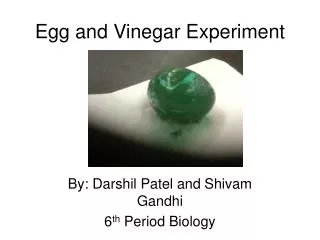
In Ms. Evans’ class, students conducted an egg experiment to observe what happens when an egg is dropped into a mystery liquid. Over two days, they noted changes such as the egg appearing larger with bubbles and a cracked, softer shell. By Day 2, they concluded that the mystery liquid was vinegar, which dissolved the egg's calcium carbonate shell, creating bubbles from the release of carbon dioxide. The experiment sparked curiosity about different liquids, including milk, soda, orange juice, and water, and their potential effects on eggs.

The Egg Experiment: Discovering the Effects of Vinegar on Eggshells
E N D
Presentation Transcript
Our Egg Experiment Ms. Evans’ Class
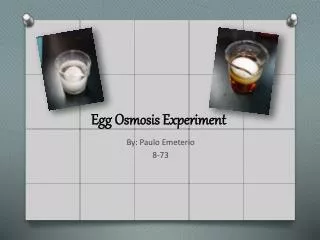
NE W OBSERVATIONS • Egg looks larger • Bubbles on it • Looks brown/ yellow/ clear • Egg floating and looks cracked and softer • Liquid decreased • Shell looks thinner • Looks like salt on top • Still smells like vinegar
Conclusion • The “mystery liquid” dissolved the egg’s shell. The remaining part of the egg was rubbery and soft. • The mystery liquid was vinegar which contains acid. The acid in the vinegar began to corrode the egg’s calcium carbonate shell as soon as it was dropped in the jar thus we saw bubbles (the release of the carbon dioxide).
What if’s…… • What if we soaked the egg in milk? • What if we soaked the egg in soda? • What if we soaked the egg in orange juice? • What if we soaked the egg in water?