Merchandise Inventory, Cost of Goods Sold, and Gross Profit
Merchandise Inventory, Cost of Goods Sold, and Gross Profit Chapter 6 Income Statements Service Company Century 21 Real Estate Income Statement Year Ended December 31, 20xx Merchandising Company General Motors Corporation Income Statement Year Ended December 31, 20xx

Merchandise Inventory, Cost of Goods Sold, and Gross Profit
E N D
Presentation Transcript
Merchandise Inventory, Cost of Goods Sold, and Gross Profit Chapter 6
Income Statements Service Company Century 21 Real Estate Income Statement Year Ended December 31, 20xx Merchandising Company General Motors Corporation Income Statement Year Ended December 31, 20xx Service revenue $XXX Expenses Salary expense X Depreciation expense X Income tax expense X Net income $ X Sales revenue $185 Cost of goods sold 146 Gross profit 39 Operating expenses: Salary expense X Depreciation expense X Income tax expense $ X Net income $ 4 ©2006 Prentice Hall Business Publishing Financial Accounting, 6/e Harrison/Horngren
Balance Sheets Service Company Century 21 Real Estate Balance Sheet Year Ended December 31, 20xx Merchandising Company General Motors Corporation Balance Sheet Year Ended December 31, 20xx Current assets: Cash $X Short-term investments X Accounts receivable, net X Prepaid expenses X Current assets: Cash $ X Short-term investments X Accounts receivable, net X Inventory 11 Prepaid expenses X ©2006 Prentice Hall Business Publishing Financial Accounting, 6/e Harrison/Horngren
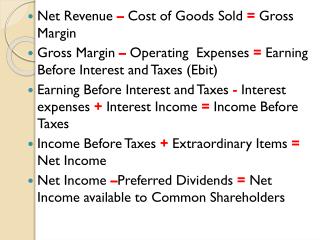
Gross Profit (Gross Margin) Sales Revenue - Gross Profit - Operating Expenses Net Income
Learning Objective 1 Account for inventory transactions.
Inventory Accounting Systems • Periodic systems do not keep a continuous record of inventory on hand. • Perpetual systems maintain a running record to show the inventory on hand at all times.
Recording Transactionsin the Perpetual System Purchase price of the inventory $600,000 + Freight-in 4,000 – Purchase returns – 25,000 – Purchase allowances – 5,000 – Purchase discounts – 14,000 = Net purchases of inventory $560,000
Inventory Accounts Payable Beg. 100,000 560,000 560,000 Recording Transactionsand the T-Accounts Inventory 560,000 Accounts Payable 560,000 Purchased inventory on account ©2006 Prentice Hall Business Publishing Financial Accounting, 6/e Harrison/Horngren
Recording Transactionsand the T-Accounts Sale on account $900,000 (cost $540,000): Accounts Receivable 900,000 Sales Revenue 900,000 Cost of Goods Sold 540,000 Inventory 540,000 ©2006 Prentice Hall Business Publishing Financial Accounting, 6/e Harrison/Horngren
Cost of Goods Sold 540,000 Recording Transactionsand the T-Accounts Inventory Beg. 100,000 560,000 120,000 540,000
Reporting in theFinancial Statements Income Statement (partial) Sales revenue $900,000 Cost of goodssold 540,000 Gross profit $360,000 Ending Balance Sheet (partial) Current assets: Cash $ XXX Short-term investments XXX Accounts receivable, net XXX Inventory 120,000 Prepaid expenses XXX
Reporting in theFinancial Statements Net purchases Purchases + Freight-in – Purchase returns & allowances – Purchases discount Net sales Sales revenue – Sales returns & allowances – Sales discounts
Learning Objective 2 Analyze the various inventory methods.
What Goes Into Inventory Cost? • Sum of all costs incurred to bring asset to its intended use • Inventory costing methods: • Specific unit cost • Weighted-average cost • First-in, first-out (FIFO) • Last-in, first-out (LIFO)
Illustrative Data Beginning inventory (10 units @ $10) $ 100 No. 1 (25 units @ $14 per unit) $350 No. 2 (25 units @ $18 per unit) 450 Total purchases 800 Cost of goods available for sale $ 900 Ending inventory: 20 units Cost of goods sold: 40 units
5 Units @ $10 25 Units @ $14 10 Units @ $18 Specific Unit Cost Cost of Goods Sold $ 50 350 180 $580 $900 – $580 = $320
Weighted-Average $900 total cost ÷ 60 units = $15/unit Ending inventory = 20 × $15 = $300 Cost of goods sold = 40 × $15 = $600
First-In, First-Out Ending Inventory Cost: 60 units Less units sold 40 Ending inventory 20 units 20 units × $18 per unit = $360
First-In, First-Out 10 Units @ $10 Cost of Goods Sold $100 350 90 $540 25 Units @ $14 5 Units @ $18
Last-In, First-Out Ending Inventory Cost: 60 units Less units sold 40 Ending inventory 20 units 10 units × 10 = $100 10 units × 14 = 140 Total $240
Last-In, First-Out Cost of Goods Sold $450 210 $660 25 Units @ $18 15 Units @ $14
Income Effects ofInventory Methods Assumed Sales Revenue Cost of Goods Sold Gross Profit Specific unit cost $1,000 – 580 = $420 Weighted-average $1,000 – 600 = $400 FIFO $1,000 – 540 = $460 LIFO $1,000 – 660 = $340 ©2006 Prentice Hall Business Publishing Financial Accounting, 6/e Harrison/Horngren
Learning Objective 3 Identify the income and the tax effects of the inventory methods.
FIFO LIFO Gross profit $460 $340 Operating expenses 260 260 Income before taxes $200 $ 80 Income tax expense (40%) $ 80 $ 32 The Tax Advantage of LIFO The most attractive feature of LIFO is low income tax payments when prices are increasing.
Comparison of Inventory Methods • FIFO produces inventory profits during periods of inflation • LIFO allows managers to manipulate net income • LIFO liquidation
Consistency Principle • Use the same accounting methods and procedures from one period to the next • May change inventory methods, but must disclose the effects of the change on net income
Disclosure Principle • Financial statements should report enough information to enable an outsider to make knowledgeable decisions about the company.
Conservatism • The least favorable figures are presented in the financial statements.
Lower-of-Cost-or-Market Rule • Report inventory at the lower of its historical cost or market (replacement) value • If the replacement cost falls below its historical cost, write down the value of the inventory
Learning Objective 4 Use the gross profit percentage and inventory turnover to evaluate business.
Using the Financial Statementsfor Decision Making Gross profit percentage = Gross profit ÷ Net sales revenue Inventory turnover = Cost of goods sold ÷ Average inventory
Learning Objective 5 Estimate inventory by the gross profit method.
Beginning inventory + Purchases = Cost of goods available for sale – Ending inventory = Cost of goods sold Estimating Inventory Gross profitmethod - based on computation of cost-of-goods-sold - Cost of goods sold = Ending inventory
Objective 6 Show how inventory errors affect cost of goods sold and income.
Effects of Inventory Errors • An error in the ending inventory creates errors for cost of goods sold and gross profit. • The current year’s ending inventory is next year’s beginning inventory.
Reporting Inventory Transactions on the Statement of Cash Flows • Inventory transactions are operating activities • The purchase of inventory requires a cash payment, and the sale a cash receipt