Understanding Narrative Perspectives: Key Concepts in Literature
This guide explores various narrative perspectives and literary terms essential for analyzing literature. It covers omniscient POV, first-person narration, and third-person limited perspectives, highlighting the credibility of narrators. Key elements such as sensory details, tone, diction, voice, and genres are defined, alongside themes and universal themes that resonate across cultures. By understanding these concepts, readers can deepen their appreciation of storytelling and the intricate ways authors engage with their audience.


Understanding Narrative Perspectives: Key Concepts in Literature
E N D
Presentation Transcript
Voice P.134,148,
Points of View • -Omniscient POV—narrator is not a character in the story; omniscient means “all knowing,” and narrator is able to tell us everything about all characters • -First-person narrator—is character in story who talks to us • -credible—narrator can be trusted • -unreliable—narrator is biased and does not (or cannot) tell the truth • -Third-person-limited—storyteller zooms in on one character but talks about the character in third person, using he or she; what we know about the other characters is limited
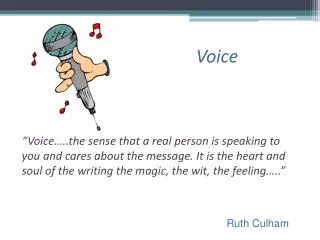
Other Lit. Terms • -sensory details—words describing sights, sounds, and smells of the setting • -tone—attitude a speaker or writer takes toward a subject, character or audience • -diction—writers choice of words • -voice—made up of writers tone and diction • -genres—categories distinguished by style, form, or content; I.e. mystery, science fiction, nonfiction, tragic comedy, etc.
Other Lit. Terms (con) • -theme—central idea, or insight, about life a story reveals • -universal themes—deal with such basic human concerns as good vs. evil, life and death, love and loss; usually cross-cultural and carry over time