Coping with Nerves
This guide by Charlotte van Zuthem helps you cope with nerves during presentations. Acknowledging that nerves are a natural response, it emphasizes effective preparation and skill development. Key topics include understanding the importance of core concepts over memorization, rehearsing thoroughly while incorporating body language, and enhancing voice control. The guide also covers strategies for the presentation day, like familiarizing yourself with the venue, making eye contact, and managing mistakes. Finally, it stresses the importance of reflecting on your performance to identify strengths and areas for improvement.

Coping with Nerves
E N D
Presentation Transcript
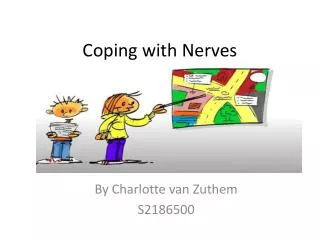
Coping with Nerves By Charlotte van Zuthem S2186500
Introduction • Everyone is dealing with it. • Nerves are actually a good sign. • Topics: • Preparation • Presentation Day • Skills • Debrief
Preparation • Do not learn every single word. • Prepare core concepts and ideas. • A lot of research is no waste, it helps! • Rehearse, rehearse, rehearse: • Include body language • Practice voice control • Breathe well • Make eye contact
Presentation day. • Check out venue before hand if possible. • Your audience can’t see inside you • When it is your turn to speak... • What to do when you do feel nerves • What to do when you make a mistake
Skills • Body language 85% • Voice control • Eye contact • Breathing
Debrief. • Afterwards take some time to consider how you did. • Note you weaknesses. • And your strengths.