The Life and Legacy of John Steinbeck: A Voice for the Dispossessed
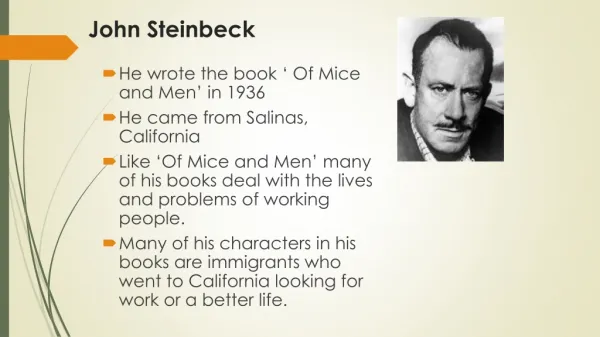
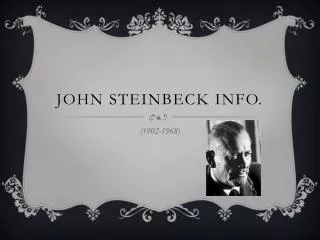
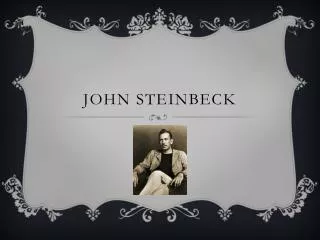
John Steinbeck (1902-1968) was an influential American author who believed in the political power of fiction. Born in California's Salinas Valley, he wrote poignant stories reflecting the struggles of the lower class, particularly during the Great Depression. His acclaimed works, including "Of Mice and Men," "East of Eden," and "The Grapes of Wrath," focus on themes of displacement, poverty, and the American experience. A Pulitzer Prize winner and Nobel laureate, Steinbeck's stories continue to resonate, capturing the plight of the marginalized in society.


The Life and Legacy of John Steinbeck: A Voice for the Dispossessed
E N D
Presentation Transcript
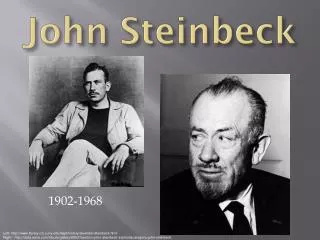
John Steinbeck • 1902-1968 • Believed in the political power of fiction and wrote to deliver a message • Born in California’s Salinas Valley • Worked a variety of jobs in his youth: fruit picker, painter, scientist’s lab assistant, etc. • Of Mice and Men (1937) was his first literary success • Won Pulitzer Prize in 1940 and Nobel in in 1962
Common Characteristics of Steinbeck’s Writing • Most take place in the Salinas Valley • Many works take place in the Great Depression • Works known as “Dust Bowl fiction” • Mostly focuses on the lower class
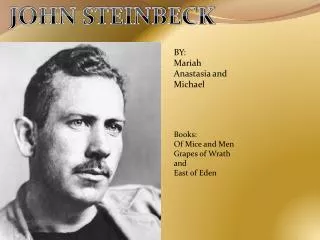
Steinbeck Novels • East of Eden • Of Mice and Men • Grapes of Wrath • Cannery Row • The Pearl • The Red Pony • The Moon is Down
The Grapes of Wrath • Steinbeck spent 2 years living and working with “Okies” • This experience inspired The Grapes of Wrath, for which he won the Pulitzer • Story of a family displaced from the Oklahoma dust bowl who found poverty and exploitation in California, in lieu of the wages and land for which they had hoped
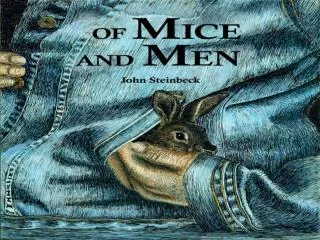
Of Mice and Men • Concentrates on two displaced migrant ranch workers • Appears in the American Library Association’s list of Most Challenged Books of the 21st Century • Based on “To a Mouse” by Robert Burns
Quotes from To a Mouse • “The best laid schemes ‘o mice and men gang aft agley.” • “The best laid plans of mice and men often go astray.”