Understanding Supply Chain Management: Types and Importance of Distribution Channels
This article explores the concept of Supply Chain Management (SCM) and its significance in today's businesses. We discuss various types of distribution models, including zero-level and one-level chains, alongside the roles of different stakeholders like producers, wholesalers, retailers, and consumers. Key functions of SCM, such as stock control, quality management, vendor management, and efficient transportation, are highlighted. Additionally, we explain why SCM is crucial for avoiding waste, matching supply with demand, and minimizing cycle time, ultimately promoting lean production and cost-effectiveness.

Understanding Supply Chain Management: Types and Importance of Distribution Channels
E N D
Presentation Transcript
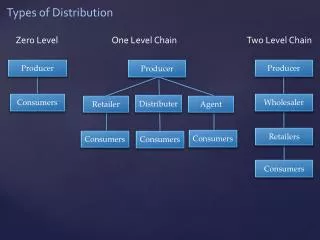
Types of Distribution Zero Level One Level Chain Two Level Chain Producer Producer Producer Consumers Wholesaler Distributer Retailer Agent Retailers Consumers Consumers Consumers Consumers
We Love Logistics Commercial • http://www.pressroom.ups.com/Video/UPS%3A+We+Love+Logistics+Commercial+-+Mr.+Big
Supply Chain Management Supply Chain Management (SCM) = the process of managing and controlling the sequence of activities from the production of a product to its delivery to the consumer, in a cost-effective way Raw Materials Production Customers Order volume determines purchases
Supply Chain Management Supply Chain Management (SCM) = the process of managing and controlling the sequence of activities from the production of a product to its delivery to the consumer, in a cost-effective way Raw Materials Production Customers Order volume determines purchases • Key Functions: • Stock control • Quality control • Vendor (supplier) mgt. • Purchasing • Transportation
Supply Chain Management Supply Chain Management (SCM) = the process of managing and controlling the sequence of activities from the production of a product to its delivery to the consumer, in a cost-effective way Raw Materials Production Customers Order volume determines purchases • Key Functions: • Stock control • Quality control • Vendor (supplier) mgt. • Purchasing • Transportation • Why is SCM Important? • Avoiding mistakes / waste (time, materials and $’s) • Matching supply with demand • Lean production / cost reduction • Minimize cycle time ( helps planning)
Near-Beer Logistics Simulation http://forio.com/simulate/mbean/near-beer-game/simulation/#p=page0