
Microscopes
E N D
Presentation Transcript
Do Now September 22th What is a microscope? Why is a microscope such an important tool when studying biology?
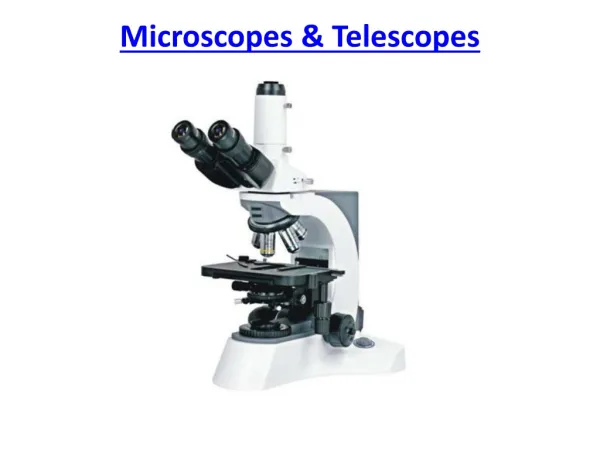
Types of Microscopes • Simple- 1 lens • Compound light- 2 or more lenses, can magnify over 1000 times • Electron-can magnify over a million times
History of Microscopes • 1st Century-Romans experimented with glass to magnify objects. • 12th Century-Italian scientist developed first eye glass to give wearer one eye magnification. • 1590-Ducth scientists developed first compound microscope
History of Microscopes • 1609-Galielo improved the compound microscope • 1665-Robert Hooke published book describing his observations using the microscope. • 1674-Anton van Leeuwenhoek was the first to use microscope to view living things Bacteria. • 1931-Started the construction of the first electron microscope.
Robert Hooke Published Micrographia-describing observation using the microscope. Used the microscope to view cells by looking at cork
Anton van Leeuwenhoek Father of Microbiology, first person to use the microscope to view living things (bacteria
Do Now: September 24 • How do you calculate the total magnification of an objective lens? • Why should we NOT use the coarse adjustment in high power? Explain using specific parts of the microscope. • QUIZ FRIDAY- Parts and functions of the microscope