Essential Pre-Suit Case Analysis for Patent Infringement Claims
90 likes | 198 Vues
This guide provides a comprehensive analysis framework for evaluating potential patent infringement cases before filing a lawsuit. Key considerations include assessing the likelihood of infringement and patent validity, estimating the size of potential recovery, the significance of obtaining an injunction, and selecting the appropriate venue. Additionally, it covers the implications of legal fees, expert involvement, and various types of damages, including reasonable royalties and lost profits. Understanding these aspects can greatly influence the strategy and outcome of patent litigation.


Essential Pre-Suit Case Analysis for Patent Infringement Claims
E N D
Presentation Transcript
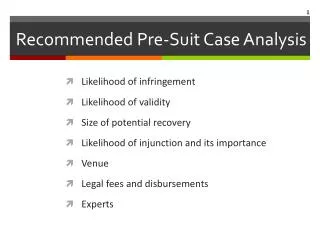
Recommended Pre-Suit Case Analysis • Likelihood of infringement • Likelihood of validity • Size of potential recovery • Likelihood of injunction and its importance • Venue • Legal fees and disbursements • Experts
Size of Potential Recovery • Adequate to compensate for infringement, but not less than reasonable royalty (§284) • Lost profits • Reasonable royalties • Multiplied damages • When damages accrue
Lost Profits • “But for” test for recovering lost profits • Demand for patented product or method • No non-infringing substitutes • Patentee has mfg capacity • Amount of profit but for infringement • Market share theory
Reasonable Royalties • Applies to extent patentee unable to prove lost profits • Reasonable royalty = amount willing licensee and willing licensor would agree to prior to infringement • Georgia Pacific factors • Royalty base is sale price of infringing article if entire market value derived from patented feature
Multiplied Damages • Willful infringement • Must prove infringer acted recklessly • High likelihood that infringer’s action infringed valid and enforceable patent • Infringer knew or should have known consequences of his actions • Under §284, court can award up to treble damages • Exceptional case • Court can award attorneys fees to prevailing party under §285 • Willful infringement • Litigation misconduct
When Damages Accrue • If patentee sells patented product, damages accrue when infringer given actual or constructive notice • Marking constitutes constructive notice • Not required for method patent • Consequences of failure to mark • Damages don’t accrue until actual notice • E.g., letter charging infringement • Filing suit • If patentee doesn’t sell patented product, damages accrue when infringement began
Likelihood of Injunction and Its Importance • Historically permanent injunction routinely granted • In eBay, S. Ct. held non-patent test applies • Injunction factors • Irreparable harm • $ adequate compensation • Balance of hardships • Public interest • Public health or welfare
Venue – Where to Sue • Subject matter jurisdiction • §1338(a) • Personal jurisdiction • Venue • §1391(b), §1400(b) • Patent friendly jurisdiction • Home forum • Time to trial • Local patent rules
Recommended Pre-Suit Case Analysis • Likelihood of infringement • Likelihood of validity • Size of potential recovery • Likelihood of injunction and its importance • Venue • Legal fees and disbursements • Experts