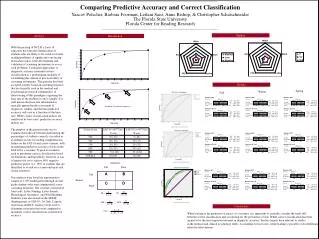
Comparing Incorrect and Correct Examples in Algebra Classrooms
410 likes | 600 Vues
Comparing Incorrect and Correct Examples in Algebra Classrooms. Kelley Durkin Bethany Rittle-Johnson Russell Ramsey Vanderbilt University. Research Questions. How do teachers make use of incorrect and correct examples in algebra classrooms? Which recommended practices do they follow?.


Comparing Incorrect and Correct Examples in Algebra Classrooms
E N D
Presentation Transcript
Comparing Incorrect and Correct Examples in Algebra Classrooms Kelley Durkin Bethany Rittle-Johnson Russell Ramsey Vanderbilt University
Research Questions • How do teachers make use of incorrect and correct examples in algebra classrooms? • Which recommended practices do they follow?
Why use incorrect examples? • Past behaviorist theory and people’s intuition don’t support using incorrect examples (Skinner, 1961). • Teachers in our study expressed the most concern about these incorrect examples. • Afraid they might overwhelm and confuse students.
Why use incorrect examples? • Math education researchers have long advocated for using incorrect examples in math classrooms (Bell, 1993). • Suggested that teachers directly confront students’ misconceptions and view errors positively (e.g., Bell, 1993; Borasi, 1994; McIntosh, Stacey, Tromp, & Lightfoot, 2000; Swan, 2007). • Strengthening use of correct procedures and improving knowledge of concepts (Durkin, 2009; Huang, Liu, & Shiu, 2008; Siegler, 2002).
Recommended Practices • Case studies and teaching design studies have introduced recommended practices for use with incorrect examples (Bell, 1993; Borasi, 1994; McIntosh et al., 2000; Swan, 2007) .
Recommended Practices: How to Introduce and Identify Errors • Incorrect examples can be helpful when introducing new material. • Teachers are encouraged to: • Provide time for students to decide whether an example is correct or incorrect. • Use small groups. • Reach a class consensus on whether an example is correct. • Deep level: Asking multiple students to explain why Alex or Morgan is incorrect • Surface level: Asking for a show of hands (Bell, 1993; Borasi, 1994; McIntosh et al., 2000; Swan, 2007)
Recommended Practices: How to Discuss Examples • Teachers are encouraged to: • Encourage multiple students to share and justify their ideas to the class. • Ask Jon who he thought was correct and why, then ask Megan if she agrees and why. • Support an effective discussion of errors and correct concepts. • Prompt for what was different between the two examples that made one correct and one incorrect. • Include a summary of the main ideas after the discussion. (Bell, 1993; Borasi, 1994; McIntosh et al., 2000; Swan, 2007)
Which is correct? Examples • Focused on teachers’ use of Which is correct? examples. • Two hypothetical students solved a problem—one solved the problem correctly, the other solved the problem incorrectly due to some common misconception. • A series of explanation prompts were included in an effort to promote student reflection.
Method • Participants • 8 out of 12 teachers used Which is correct? examples • On average, each teacher videotaped 3 or 4 examples, for 28 videos total • Coding Scheme • An experienced teacher used a strict coding scheme based on recommended practices for all videos. • Reliability coding is currently being conducted.
Results: How to Introduce and Identify Errors • Incorrect examples can be helpful when introducing new material. • Teachers are encouraged to: • Provide time for students to decide whether an example is correct or incorrect. • Use small groups. • Reach a class consensus on whether an example is correct.
Prior Knowledge of Students • Most often using incorrect examples to review previously learned information. • 20 out of the 28 videos were on lessons from the first two chapters of students’ textbooks.
Results: How to Introduce and Identify Errors • Incorrect examples can be helpful when introducing new material. • Teachers are encouraged to: • Provide time for students to decide whether an example is correct or incorrect. • Use small groups. • Reach a class consensus on whether an example is correct.
Results: How to Introduce and Identify Errors • Incorrect examples can be helpful when introducing new material. • Teachers are encouraged to: • Provide time for students to decide whether an example is correct or incorrect. • Use small groups. • Reach a class consensus on whether an example is correct.
Identifying and Introducing Errors • When Labeled as Correct/Incorrect
Results: How to Introduce and Identify Errors • Incorrect examples can be helpful when introducing new material. • Teachers are encouraged to: • Provide time for students to decide whether an example is correct or incorrect. • Use small groups. • Reach a class consensus on whether an example is correct.
Results: How to Introduce and Identify Errors • Incorrect examples can be helpful when introducing new material. • Teachers are encouraged to: • Provide time for students to decide whether an example is correct or incorrect. • Use small groups. • Reach a class consensus on whether an example is correct.
Identifying and Introducing Errors • Format of Studying Examples
Results: How to Introduce and Identify Errors • Incorrect examples can be helpful when introducing new material. • Teachers are encouraged to: • Provide time for students to decide whether an example is correct or incorrect. • Use small groups. • Reach a class consensus on whether an example is correct.
Results: How to Introduce and Identify Errors • Incorrect examples can be helpful when introducing new material. • Teachers are encouraged to: • Provide time for students to decide whether an example is correct or incorrect. • Use small groups. • Reach a class consensus on whether an example is correct.
Identifying and Introducing Errors • Student Participation in Identifying Correct
Results: How to Introduce and Identify Errors • Incorrect examples can be helpful when introducing new material. • Teachers are encouraged to: • Provide time for students to decide whether an example is correct or incorrect. • Use small groups. • Reach a class consensus on whether an example is correct.
Results: How to Discuss Examples • Teachers are encouraged to: • Encourage multiple students to share and justify their ideas to the class. • Support an effective discussion of errors and correct concepts. • Include a summary of the main ideas after the discussion.
Discussing Examples • Student Participation in Discussion
Results: How to Discuss Examples • Teachers are encouraged to: • Encourage multiple students to share and justify their ideas to the class. • Support an effective discussion of errors and correct concepts. • Include a summary of the main ideas after the discussion.
Results: How to Discuss Examples • Teachers are encouraged to: • Encourage multiple students to share and justify their ideas to the class. • Support an effective discussion of errors and correct concepts. • Include a summary of the main ideas after the discussion.
Discussing Examples • Content of Discussion
Results: How to Discuss Examples • Teachers are encouraged to: • Encourage multiple students to share and justify their ideas to the class. • Support an effective discussion of errors and correct concepts. • Include a summary of the main ideas after the discussion.
Results: How to Discuss Examples • Teachers are encouraged to: • Encourage multiple students to share and justify their ideas to the class. • Support an effective discussion of errors and correct concepts. • Include a summary of the main ideas after the discussion.
Discussing Examples • Content of Summary
Results: How to Discuss Examples • Teachers are encouraged to: • Encourage multiple students to share and justify their ideas to the class. • Support an effective discussion of errors and correct concepts. • Include a summary of the main ideas after the discussion.
Results: Summary • Provide time for students to decide whether an example is correct or incorrect. • Encourage multiple students to share and justify their ideas to the class. • Support an effective discussion of errors and correct concepts. • Use to introduce new material. • Use small groups. • Reach a class consensus on whether an example is correct. • Include a summary of the main ideas after the discussion.
Consistency of Practices • Rated how often each teacher followed recommended practices in each lesson
Conclusions • Wide variability in how teachers implemented instruction with incorrect examples and which recommended practices they followed. • Many of the recommended practices that teachers implemented were directly supported by our materials. • Future work should consider the best ways to support teachers using these recommended practices.
Conclusions • We need to emphasize the benefits of using incorrect examples to teachers. • Teachers may be hesitant to use incorrect examples when introducing new information. • Encouraging teachers to use incorrect examples with the recommended practices should improve student learning.
Additional Information from the Correct and Incorrect Examples presentation
General Results • Mean of 15 minutes on each example (SD = 9.30, range from 0.42 to 37.47 minutes) • 61% of the time examples used in the middle of a class period • 21% of the time used at the end of class • 18% of the time used at the beginning of class
General Results • After example, 39% of the time continued with a lesson on the same topic • 21% of the time completed practice problems • 21% of the time started a new lesson • 18% ended the class for the day
Discussing Examples • Comparisons Made During Discussion