Download
1 / 8
80 likes | 188 Vues
Explore the intense political battles of the election of 1824, where sectionalism and the split in the Democratic-Republican Party created a fierce race between John Quincy Adams, Andrew Jackson, William Crawford, and Henry Clay. The subsequent victory of Adams, with the support of Clay, led to the rise of Jacksonian Democracy, characterized by promises of spreading political power to the common man. Witness the pivotal election of 1828, where Jackson defeated Adams, ushering in a new political era marked by reforms and the controversial Spoils System. Delve into the key issues faced by Jackson, including Native American policies, state's rights, and the fate of the Bank of the United States.

E N D
The Age of Jackson Chapter 12
Politics of the People Chapter 12: Section 1
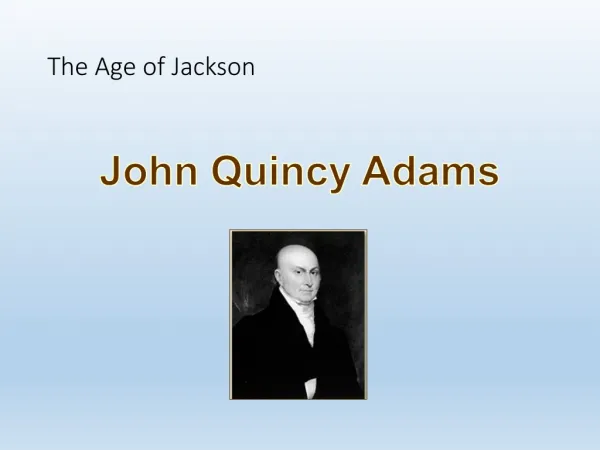
Election of 1824 • Sectionalism led to a fierce fight over the presidency. • Democratic-Republican split as 4 men hoped to replace James Monroe. • John Quincy Adams • Monroe’s Sec. Of State • New England • William Crawford • Backed by the South • Henry Clay • Westerns • Great Compromiser • Andrew Jackson • Military Hero
Election of 1824 • Andrew Jackson won majority of popular vote • But not the majority of electoral votes • According to Constitution, House of Representatives must choose president. • Must choose between the top 3 vote getters • Result: • Henry Clay came in fourth and supported Adams. • John Quincy Adams won • John Quincy Adams appointed Clay his Sec. of State.
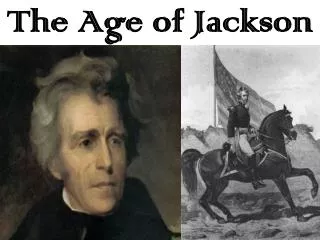
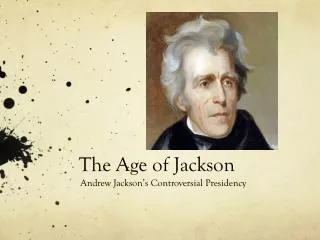
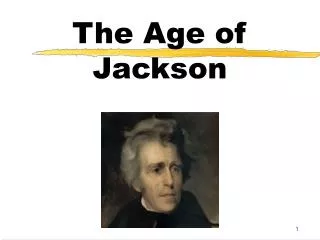
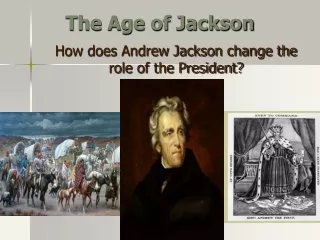
Jacksonian Democracy • Andrew Jackson felt the election had been stolen from him. • Spent the next 4 years working to gain the presidency. • Split in Democratic-Republican Party widened. • Jackson said he represented the “common man” • Said Adams represented the privileged, wealthy Easterns • Two political parties formed • Democrats- Jackson • National Republicans- Adams
Jacksonian Democracy • Def: idea of spreading political power to all the people, ensuring majority rule • As Jackson campaigned: • Spoke against government by the wealthy • Promised to look after the interests of the common person
Election of 1828 • Jackson defeated Adams • Expansion of voting rights helped Jackson win • Not based on property ownership • People saw him as a common man from a hard life.
A New Political Era • Promised to reform government. • Spoils System- giving government jobs to political backers. • Jackson faced three major issue • 1.Native Americans • 2.State’s Rights • 3.Bank of United States