Confederation Achieved
The struggle for Confederation in Canada was marked by significant challenges, including near bankruptcy for the East and West. The removal of the Corn Laws by Britain catalyzed the Great Coalition, comprising MacDonald, Brown, and Cartier, to convene the Maritime Colonies. Concerns about a strong central government versus Provincial powers spurred heated debates. Ultimately, the Maritime colonies held votes on joining Confederation, leading to the formation of the Dominion of Canada on July 1, 1867. This event raised questions about its impact on Maritime interests and Canada’s true independence from Britain.


Confederation Achieved
E N D
Presentation Transcript
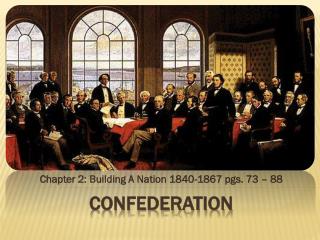
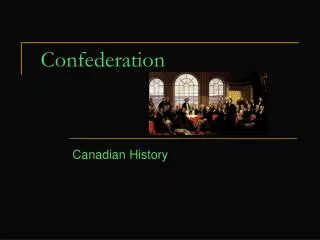
Final Chance • Canada East and West were nearly bankrupt • Corn Laws had been removed by Britain • The Great Coalition – MacDonald, Brown and Cartier – arranged a meeting with the Maritime colonies • This was called the Conferences
Maritime Concerns • Felt they would have no voice if there was a strong central (Federal) government • MacDonald wanted a strong central government • Maritimes and Cartier wanted stronger Provincial governments • MacDonald backed down and agreed to let the Provinces keep some power
Vote • After the conferences, the Maritime colonies returned home and voted in their own governments (legislatures) whether they should join in Confederation • Nova Scotia and New Brunswick voted yes to join • PEI and Newfoundland voted no
Off to Britain • Representatives from each of the colonies travelled to London, England and signed the British North American Act • This created the Dominion of Canada • July 1, 1867 it was signed
Small Assignment • Answering the following in a MINIMUM 2 paragraph answer: • “Do you think it was in the best interests of the Maritime colonies to join confederation? Was this new Dominion of Canada truly independent of Britain?”