Download
1 / 9
90 likes | 226 Vues
This lesson, presented by Jordan Parker and Marina Ziehn in Spring 2011, delves into the landscape of biofuels deriving from plants. It defines resources as limited entities that can be consumed for benefits, distinguishing between biotic and abiotic resources. The lesson explores renewable versus limited resources and includes a quiz on different energy sources. It further discusses the benefits of utilizing renewable resources, types of biofuels like bioalcohols, biogases, and biodiesels, their creation, efficiency, and the potential for sustainable energy solutions.

E N D
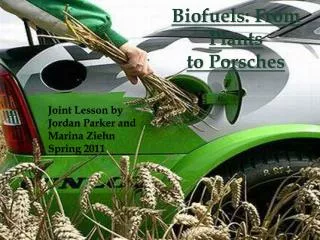
Biofuels: From Plants to Porsches Joint Lesson by Jordan Parker and Marina Ziehn Spring 2011
Resources • What is a resource? • definition: any physical or virtual entity of limited availability that needs to be consumed to obtain benefit from it • biotic: plants, animals and their products • abiotic: non-living matter, minerals not from organic matter • What is the difference between a limited resource and a renewable resource? • one takes a LONG time to form (geological periods), other can be replenished or reproduced easily
Pop Quiz • water • coal • wind • petroleum • calcium from fish • hydroelectricity • gold • iron • copper • silver • forests • animals • sun/solar energy • wood • oil
Developing/using renewable resources • Why might we want to use renewable resources more widely? • continuously available • easily available • made in large quantities • How can we get/create renewable resources?
From resource to Fuel • How are resources used?
Types of Biofuels • Bioalcohols: alcohols synthesized chemically or biologically, have high octane rating (which means they can ignite well) but lower energy density
Types of Biofuels • Biogases: gases produced by biological breakdown of organic matter (without O2)
Types of Biofuels • Biodiesels: clean burning alternative fuel, produced from domestic, renewable resources How available are these types of biofuels? How efficient is each type of biofuel?