Angular Momentum Transport in Magnetohydrodynamic Turbulence: A Comparative Study
Explore the dynamics of tachocline and accretion discs, comparing thin rotating systems with possible magneto-turbulent processes. Dive into angular momentum transport mechanisms, large-scale structures, small-scale features, and the role of turbulence models. Contemplate controversies and continuous spectrum theories for understanding instabilities and optimal modes. Investigate applications to accretion discs and the tachocline.

Angular Momentum Transport in Magnetohydrodynamic Turbulence: A Comparative Study
E N D
Presentation Transcript
ANGULAR MOMENTUM TRANSPORT BY MAGNETOHYDRODYNAMIC TURBULENCE Gordon Ogilvie University of Cambridge TACHOCLINE DYNAMICS 11.11.04
INTRODUCTION SOME TACHOCLINE ISSUES (Tobias 2004) ► sources of instability : HD and MHD ► nonlinear development ► turbulence and turbulent transport : HD and MHD SOME ACCRETION DISC ISSUES ► differential rotation and AM transport ► HD and MHD instabilities ► turbulence and turbulent transport : HD and MHD
COMPARISON TACHOCLINE ACCRETION DISC ► thin ► thin ► differentially rotating ► differentially rotating
COMPARISON TACHOCLINE ACCRETION DISC ► thin ► thin ► differentially rotating ► differentially rotating ► magnetized (probably) ► magnetized (probably) ► turbulent (probably) ► turbulent (probably) ► large-scale dynamo? ► large-scale dynamo?
COMPARISON TACHOCLINE ACCRETION DISC ► thin ► thin ► differentially rotating ► differentially rotating ► magnetized (probably) ► magnetized (probably) ► turbulent (probably) ► turbulent (probably) ► large-scale dynamo? ► large-scale dynamo? ► highly subsonic ► highly supersonic ► strong stable stratification? ► weak or no stratification?
COMPARISON TACHOCLINE ACCRETION DISC ► thin ► thin ► differentially rotating ► differentially rotating ► magnetized (probably) ► magnetized (probably) ► turbulent (probably) ► turbulent (probably) ► large-scale dynamo? ► large-scale dynamo? ► highly subsonic ► highly supersonic ► strong stable stratification? ► weak or no stratification? ► difficult to resolve ► difficult to resolve ► difficult to simulate ► difficult to simulate
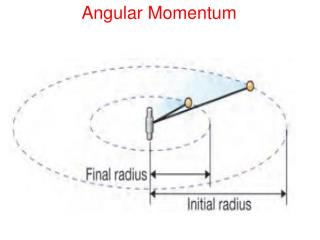
ANGULAR MOMENTUM TRANSPORT GENERAL ► anisotropic motion (Reynolds stress) ► anisotropic magnetic fields (Maxwell stress) ► non-axisymmetric gravitational fields LARGE-SCALE STRUCTURES SMALL-SCALE FEATURES ► spiral arms / shocks ► waves ► vortices ► turbulence
SHEARING SHEET ► local model of a differentially rotating disc ► uniform rotation Ωez plus uniform shear flow –2Axey ► appropriate for studies of thin discs
MAGNETOROTATIONAL INSTABILITY OPTIMAL MODE (‘channel flow’) ► layer analysis (incompressible ideal fluid, ρ= μ0 = 1) u b ► exact nonlinear solution but unstable (Goodman & Xu 1994)
MAGNETOROTATIONAL INSTABILITY NONLINEAR DEVELOPMENT (A. Brandenburg)
MAGNETOROTATIONAL INSTABILITY NONLINEAR DEVELOPMENT
MAGNETOROTATIONAL INSTABILITY NONLINEAR DEVELOPMENT
ENERGY AND ANGULAR MOMENTUM ENERGY EQUATION (shearing sheet) ► in either growing instability or saturated turbulence, ► AM transport down the gradient of angular velocity ► very natural outcome of MHD instabilities ► contrast (e.g.) convective instability or forced turbulence
TURBULENCE MODELS EDDY-VISCOSITY MODEL (von Weizsäcker 1948) VISCOELASTIC MODEL (O 2001; O & Proctor 2003) REYNOLDS-MAXWELL STRESS MODELS (Kato; O 2003)
SOME CONTROVERSIES ► ‘viscosity’ ► ‘alpha viscosity’ ► AM transport by convection ► nonlinear hydrodynamic shear instability ► baroclinic / Rossby-wave instability
CONTINUOUS SPECTRUM INTRODUCTION ► cf. Friedlander & Vishik (1995); Terquem & Papaloizou (1996) ► problems with a normal-mode approach in shearing media ●modes may require confining boundaries ●entirely absent (ky≠0) in the shearing sheet ●do not describe parallel shear flow instability ► continuous spectrum and non-modal localized approaches ●derive sufficient conditions for instability ●contain many of the most important instabilities
CONTINUOUS SPECTRUM LINEAR THEORY IN IDEAL MHD ► arbitrary reference state ► Lagrangian displacement ξ
CONTINUOUS SPECTRUM BASIC STATE ► steady and axisymmetric ► cylindrical polar coordinates (s,φ,z) ► differential rotation ► toroidal magnetic field SOLUTIONS
CONTINUOUS SPECTRUM ASYMPTOTIC LOCALIZED SOLUTIONS ► envelope localized near a point (s0,z0) ► plane-wave form with many wavefronts ► finite frequency and vanishing group velocity ► ‘frozen wavepacket’
CONTINUOUS SPECTRUM REQUIRED ORDERING
CONTINUOUS SPECTRUM LOCAL DISPERSION RELATION
CONTINUOUS SPECTRUM CASE OF ZERO MAGNETIC FIELD ► Høiland (1941) stability criteria ► necessary and sufficient for axisymmetric disturbances
CONTINUOUS SPECTRUM LIMIT OF WEAK MAGNETIC FIELD ► Papaloizou & Szuszkiewicz (1992) stability criteria ► necessary but not sufficient for stability
CONTINUOUS SPECTRUM CASE OF ZERO ANGULAR VELOCITY ► Tayler (1973) stability criteria ► necessary and sufficient
APPLICATION TO ACCRETION DISCS ► appropriate ordering scheme for a thin disc reveals ● MRI (unavoidable) ●magnetic buoyancy instability (possible) ► allows an understanding of the nonlinear state? differential rotation MRI
APPLICATION TO THE TACHOCLINE ► appropriate ordering schemes are unclear (to me) ► assume overwhelming stable stratification
APPLICATION TO THE TACHOCLINE ► appropriate ordering schemes are unclear (to me) ► assume overwhelming stable stratification ● weak B: MRI when (NB: no MRI in 2D) ●Ω=0 : Tayler (m=1) when ● suppressed at the poles if ● cf. Cally (2003) (but not requiring mode confinement) ► conclusions change under weaker stratification ● sensitivity to radial gradients; magnetic buoyancy
REMARKS ADVANTAGES ► algebraic character of eigenvalues and eigenvectors ► strictly local character, independent of BCs ► deals easily with complicated 2D basic states PROPER JUSTIFICATION ► prove existence of continuous spectrum ► asymptotic treatment of non-modal disturbances ► justifies ‘local analysis’ for a restricted class of disturbances
REMARKS NOTES OF CAUTION ► misses truly global instabilities ► neglects the role of turbulent stresses in the basic state ► neglects diffusion (double / triple) in the perturbations ●Acheson (1978); Spruit (1999); Menou et al. (2004)
SUMMARY ► analogies are imperfect but of some value ► angular momentum transport and energy arguments ► differences between HD and MHD systems ► MRI optimized for AM transport down the gradient of angular velocity but of limited applicability in the Sun ► methods for analysing linear instabilities ► continuous spectrum contains many of the important ones ► methods for understanding and modelling turbulent states