The Nazi-Soviet Pact: Stalin's Gamble Against Hitler
90 likes | 215 Vues
The Nazi-Soviet Pact of 1939 marked a surprising alliance between two rival powers, Nazi Germany and the Soviet Union. Amidst fears of German expansion and dissatisfaction with Western Allies, Stalin sought a deal to safeguard Soviet interests. This agreement not only ensured non-aggression between the two nations but also included a covert plan to divide Eastern Europe, including Poland. As tensions escalated, Stalin's decision reflected his skepticism about Western support and his determination to secure Soviet territory and military strength.


The Nazi-Soviet Pact: Stalin's Gamble Against Hitler
E N D
Presentation Transcript
Nazi-Soviet Pact By Mr Bargery Hugh Christie Technology College Downloaded from www.SchoolHistory.co.uk
BACKGROUND • Stalin had been very worried about German threats to the Soviet Union since Hitler came to power in 1933 • Hitler had openly stated that he wanted Soviet land for his Lebensraum • Stalin tried to create alliances with Britain and France but to no avail • In 1934 Stalin took the USSR into the League of Nations as a guarantee against German aggression.
The League Of Nations • Stalin gained no satisfaction from the League. Instead he saw failures • Abyssinia - a.k.a. Ethiopia • Spanish Civil War • German rearmament
Britain: Some welcomed a strong Germany as a force to fight Communism. Communism was seen as a bigger threat than Hitler France: Stalin signed a pact with France in 1935 He did not trust the French to keep to it- especially after Rhineland Britain and France
The Munich Agreement • This agreement made Stalin even more wary • Stalin was not consulted about the agreement • Stalin concluded that Britain and France were powerless to stop Hitler • Or that they were happy for Hitler to take over Eastern Europe and the USSR
The Next Moves • Despite misgivings Stalin was still prepared to talk to Britain and France about an alliance • The three countries met in March 1939 • Chamberlain was reluctant to commit Britain • Stalin believed that Britain and France made things worse by guaranteeing to defend Poland if it were attacked • Chamberlain saw the guarantee as a warning to Hitler • Stalin saw it as support for a potential enemy.
A Twist in the tale! • Negotiations continued between Britain, France and the USSR throughout Spring and Summer 1939. • Stalin, however, was also getting visits from Nazi foreign minister Ribbentrop to discuss a Nazi-Soviet pact
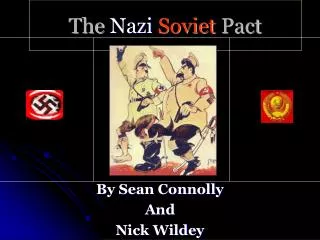
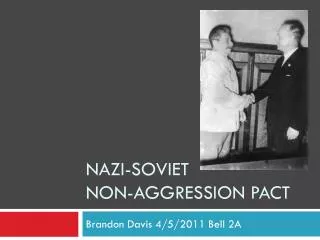
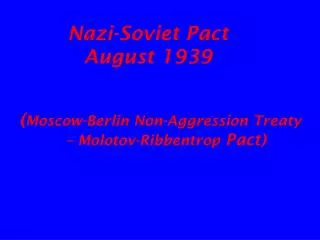
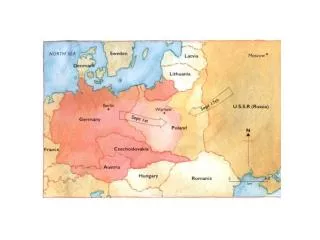
The deed is done! • On 24 August 1939 Stalin made his decision and signed a pact with Germany • The world was shocked as two arch enemies promised not to attack each other. • Privately they also agreed to divide Poland
Why did Stalin sign the pact? • Stalin was not convinced that Britain and France would be strong and reliable allies against Hitler • He also wanted large parts of eastern Poland • He did not believe that Hitler would keep his word. He wanted time to build up his forces.