Download
1 / 10
100 likes | 227 Vues
After Charlemagne's death, Europe lacked strong central government, leading to the emergence of feudalism as local leaders provided protection from various invaders like the Vikings and Magyars. This system was characterized by agreements between lords and vassals, establishing political, social, and economic relationships. Powerful nobles controlled land divided into fiefs, where vassals pledged loyalty in exchange for land and protection. A rigid class structure emerged, with most people as peasants or serfs, limiting social mobility and creating a hierarchy that defined life during the Middle Ages.

E N D
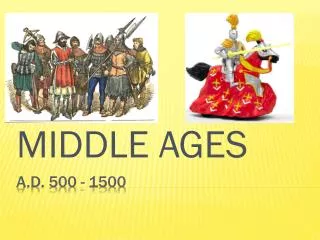
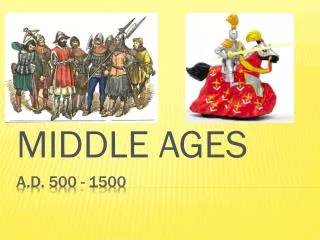
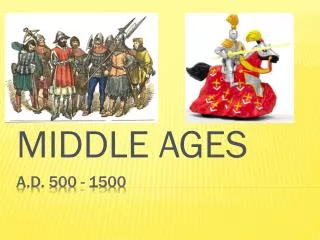
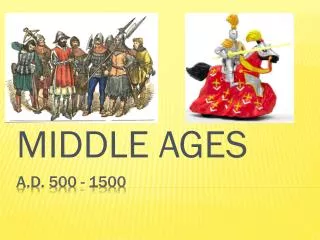
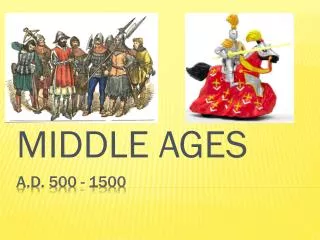
MIDDLE AGES A.D. 500 - 1500
No strong central government after the death of Charlemagne Lack of strong rulers in Europe leads to emergence of Feudal system Europe faced numerous invaders: Vikings, Magyars, Muslims The worst attacks were between 800-1000 RISE OF FEUDALISM
People turn to local leaders for protection Feudalism involved agreements, promises, and exchanges It involved Political, Social, and Economicrelationships that made sure the needs of each class were met RISE OF FEUDALISM
Feudalism was a system of local government based on the control of land Powerful nobles or lords owned large sections of land They divided their land into areas called fiefs Fiefs were given to lesser lords called vassals Vassals pledged their loyalty and military support to the lords in return for the land POLITICAL
Lords became more powerful than kings because of their landholdings They ruled their own lands, made their own laws, and controlled their own armies made up of knights Knights were the defenders of the lords’ land in exchange for fiefs POLITICAL
Class was determined at birth; almost not social mobility It was based on a pyramid Most people were peasants & most peasants were serfs Serfs could not leave the land, but they were not slaves They worked the land and in exchange received housing, farmland, and protection SOCIAL