SlideServe
Menu
Préférences
© SlideServe · v2026

Exploring Kingdoms: The Diverse World of Animals and Protists

rufin avatar
9 diapositives · 268 Views · Jul 20, 2014

This article delves into the characteristics and classifications of animals and protists. Animals, a diverse group including worms, insects, and humans, share traits such as being eukaryotic, multicellular, and heterotrophic. Key aspects of their embryological development, including the importance of blastula formation, are discussed. Protists, often seen as a diverse group themselves, lack specialized tissues and are primarily unicellular. They embody a mix of traits from plants, animals, and fungi. Understanding these kingdoms enhances our knowledge of biodiversity and the impact of human activities on ecosystems.
Exploring Kingdoms: The Diverse World of Animals and Protists - slide 1
01 / 9Exploring Kingdoms: The Diverse World of Animals and Protists
1 / 17

Télécharger la présentation

Exploring Kingdoms: The Diverse World of Animals and Protists
Une image / un lien ci-dessous est fourni (tel quel) pour télécharger la présentation

Politique de téléchargement : le contenu du site vous est fourni TEL QUEL pour votre information et votre usage personnel ; il ne peut être vendu, concédé sous licence ni partagé sur d’autres sites sans l’accord de son auteur.Le contenu vous est fourni TEL QUEL, pour votre information et votre usage personnel uniquement. Téléchargez la présentation en cliquant sur ce lien. Lors du téléchargement, si vous ne parvenez pas à télécharger une présentation, l’éditeur a peut-être supprimé le fichier de son serveur.Pendant le téléchargement, si vous ne parvenez pas à obtenir une présentation, le fichier a peut-être été supprimé par l’éditeur.

F I N

Plus de contenu associé

Transcription de la présentation
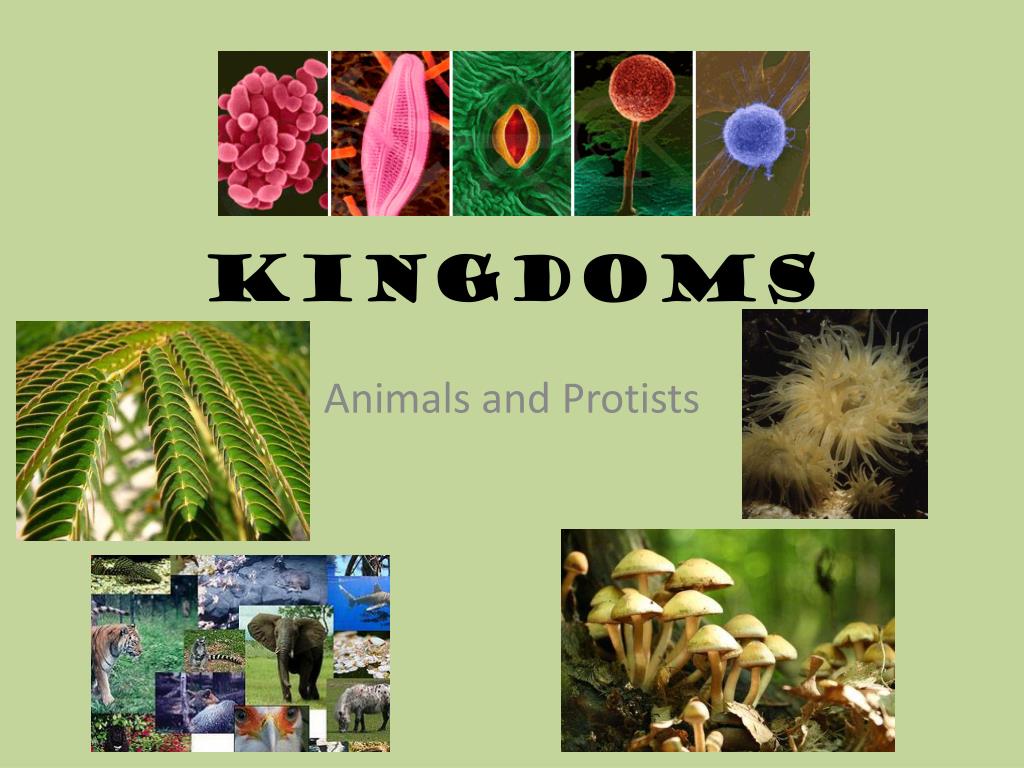
  1. Kingdoms Animals and Protists

  2. Animals • Diverse group that includes: worms, insects, humans, starfish • General Characteristics • Eukaryotic • Lack cell walls • Multicellular • Heterotrophic • Motile at some in life • Embryo develops from a blastula (hollow ball of cells)

  3. Embryological Development • Blastula formation is important in determining an animal’s body plan • Infolding of cells creates our digestive tract • Relative position of cells (outside, inside, or middle) determine what type of tissue they will become • Outside – ectoderm (skin and nerves) • Middle – Mesoderm (muscle and blood) • Inside – Endoderm (organs)

  4. Characteristics of Animal Phyla • Bilateral vs radial symmetry • Segmentation • Coelom • Deuterostomesvsprotostomes • Presence of spinal cord • Types of appendages (antennae, legs, flippers, wings, gills, etc)

  5. Classification of Humans • What are the qualifications to belong to each grouping?

  6. Protists • General Characteristics: • Eukaryotic • Lack of specialized tissues • Most are motile (use cilia, pseudopods, or flagella) • Most are unicellular

  7. Protists “potpourri of the tree of life” • Protists are essentially any eukaryote that does not fit into plant, animals, or fungus • It is believed that all other eukaryotes evolved from protists • Plant-like: Autotrophic, perform photosynthesis, some have cell walls • Animal-like: Heterotrophic, motile • Fungi-like: heterotrophic (saprophytes), cell walls made of cellulose (not chitin)

  8. Euglena – Special case for classification • Tough to classify as plant-like or animal-like • Autotrophic and heterotrophic • Lacks a cell wall • Motile (flagellum), usually swim to find optimal light levels for photosynthesis

  9. Independent Reading • Human Impacts on Biodiversity • Pearson text Pg 76-80 • What are the 5 main threats to biodiversity? Briefly explain each in your own words. • What does it mean when human activities have “synergistic effects”?