Download
1 / 7
70 likes | 234 Vues
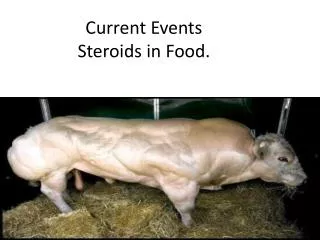
Steroids, both natural and artificial, are increasingly used in food production, particularly in red meats, fruits, and dairy products. Natural hormones like phytoestrogens may offer protective benefits against diseases like breast cancer, while artificial options, such as testosterone and estradiol, pose significant health risks. Animals are injected or implanted with steroids to hasten growth, but the consumption of these substances can affect human health, leading to various side effects for men, women, and adolescents, including infertility, hormonal imbalances, and growth issues.

E N D
Types of steroids(hormones).. • Natural: Phytoestrogens(said to protect against breast cancer) • Artificial: Diethylstilbestrol (DES, increase risk of vaginal cancer in daughters of treated women),Zeranol,Estradiol, Testosterone, Progesterone, Melengestrolacetate, Trenbolone acetate
What’s Happening? Steroids or hormones as are being used in foods that people wouldn’t even imagine. Foods such as red meats(meat from cows, pigs, and chickens), fruits(grapes, and vegetables), and dairy products. Some of the hormones are naturally grown as well.
How are steroids being put into animals and food? • Injected into pituitary glands of cows • A pellet placed under the skin of the ear
Why are they being used? Steroids are mostly used to make younger animals grow faster so they can reproduce more. They help reduce time and the amount of feed eaten by the animal before slaughter.
Who is affected by the steroids? Steroids affect everyone. Mostly when they are consumed by being eaten.
Side affects… • Men: Shrinking of the testicles, reduced sperm count, infertility, baldness, development of breasts, increased risk for prostate cancer • Women: Growth of facial hair, male-pattern baldness, changes in or cessation of the menstrual cycle, enlargement of the clitoris, deepened voice • Adolescents: stunted growth due to premature skeletal maturation and accelerated puberty changes; adolescents risk not reaching their expected height if they take AAS before the typical adolescent growth spurt