Making Physical Measurements
This comprehensive guide outlines crucial elements of making physical measurements essential for chemical engineering students. It covers general approaches to experiments, terminology, calibration, error types, and the importance of accuracy and precision. Emphasizing teamwork and time management, the document also highlights appropriate equipment usage, measurement methodologies, and analytical strategies. Crucial topics include random and systematic errors, calibration techniques, and the significance of knowing equipment limitations. A must-read for aspiring engineers focusing on reliable experimentation.

Making Physical Measurements
E N D
Presentation Transcript
Making Physical Measurements Terry A. Ring Department of Chemical Engineering University of Utah 25 August 2008
OVERVIEW • Course experiments – general approach to making physical measurements • Terminology • Calibration • Types of Instruments • Preliminary Lab Conferences
Experiments • Preparation for an experiment - organization – teamwork - time management • Equipment/apparatus - keep detailed list of equipment/chemicals - know your equipment/capabilities - most equipment expensive, do not abuse or neglect
Important Terms • Error – the difference between the “true value” and the observed (measured) value • Random error – fluctuations in the measured value due to repeated measurements • Systematic error – all measured values are off by the same amount due to a) incorrect calibration b) faulty equipment c) other causes • Illegitimate error – erroneous method/technique, goofs
Random Error Sources • Judgement errors, estimate errors, parallax • Fluctuating Conditions • Digitization • Disturbances such as mechanical vibrations or static electricty caused by solar activity • Sampling
Systematic Error Sources • Calibration of instrument • Environmental conditions different from calibration • Technique – not at equilibrium or at steady state. • Sampling
Important Terms • Accuracy - a measure of how close the result comes to the “true value” (correctness). An indication of how well we control systemic errors. • Precision – a measure of how exactly the result is determined (reproducibility) – no relation to “true value”. An indication of how well we overcome or analyze random errors • Limit of detection – smallest value which can be detected.
Important Terms • Discrepancy – the difference between values for the same measurement • Uncertainty – an estimate of the range in the error. Always determined for a particular confidence level, i.e.
Potential Problems • Paralax • Scale Interpretation • Appropriate Scale • Appropriate Instrument • Appropriate detection limits • Signal to Noise ratio • Appropriate Accuracy and Precision • Significant Figures
WHAT PRECISION IS REQUIRED? • Overall Precision • Impact on Calculation • Difficulty of Measurement
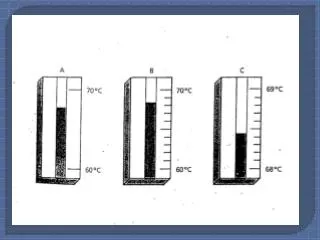
Calibration • Should use primary standards if possible • Calibrate as close to measuring conditions as possible • Sometimes performed at • the factory • Professional laboratories • Laboratory standards ice bath, constant temp bath • Tabulated properties and relationships boiling water at barometric pressure triple point of water • Linear vs Non-linear Calibration curves
Types of Instruments • Off-line Process Instrumentation • Density Measurement • Weight and Misc. Sensors • Analytical Instrumentation • Issues • Sampling • Grab sample • Statistical Sampling • Sample Preparation • Splitting, extraction, decomposition • On–line Instrumentation • Flow Measurement • Level Measurement • Temperature Measurement • Pressure Measurement • Safety Quantitative
Liquid Density Measurement • Hydrometers (based upon buoyancy) • Pycnometer (based on weight) • Weighing a fixed volume • Oscillating Coriolis Densitometers • Hydrostatic Densitometers • Radiation Densitometers – liquid/sludge • Vibrating Densitometers – Liq/sludge/gas
Analytical Instrumentation • Viscometers • Spectrophotometers • IR • UV-Visible • Chromatographs • Ion-selective Electrodes • Mass Spectrometers • Inductively Coupled Plasma Spectrometer • Many, many more
Types of Analysis • Content Analysis – What is in it? • Qualitative • Semi-Quantitative • Quantitative • Distribution Analysis – Where is it? • Process Analysis – When does it occur? • Structural Analysis –What is its structure?
Analytical Strategies • Sampling • Sample Preparation • Analytical Principle • Analytical Procedure • Decomposition Methods • Separation Methods • Enrichment Methods • Measurement Methodology • Measurement Results • Accuracy • Precision
CONCLUSIONS • KNOW YOUR EQUIPMENT • Know its limitations and strengths • CHOOSE THE RIGHT PRECISION • CALIBRATE AS MUCH AS POSSIBLE • UNDERSTAND THE LIMITATIONS OF YOUR EQUIPMENT • LEARN THE TERMINOLOGY
Preliminary Lab Conference • Literature work- understand theory/principles/concepts from textbooks and references • References- textbook- Perry’s chemical engineers handbook- CRC handbook of chemistry/physics- Instrument Engineers’ Handbook- process measurement and analysis – B.G. Liptak, ed.- Web sites • Chemical and Equipment Safety