
Understanding Neutralization Reactions and Chemical Changes

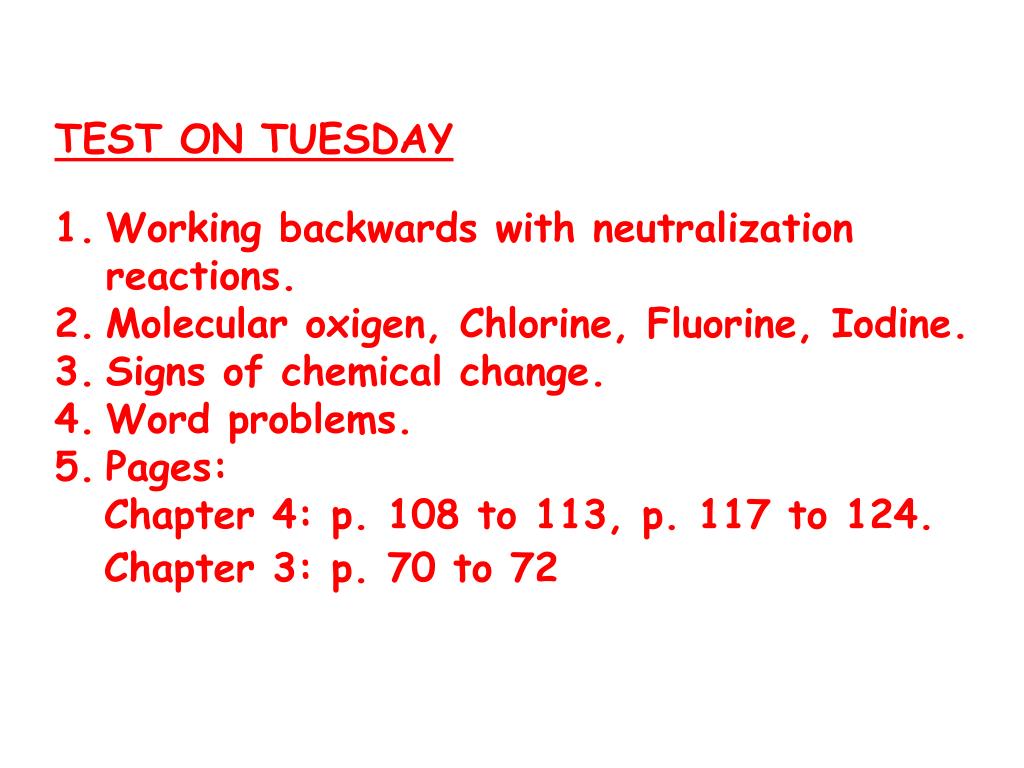
This resource focuses on neutralization reactions involving compounds such as lead nitrate and sodium bromide, highlighting their chemical processes and outcomes. It includes detailed examples that illustrate signs of chemical change and provides practice problems to enhance understanding. The materials span Chapters 3 and 4, guiding students through balancing equations and predicting product masses. Ideal for chemistry learners, this guide aids in grasping key concepts in molecular interactions and precipitate formation.
Télécharger la présentation 
Politique de téléchargement : le contenu du site vous est fourni TEL QUEL pour votre information et votre usage personnel ; il ne peut être vendu, concédé sous licence ni partagé sur d’autres sites sans l’accord de son auteur.Le contenu vous est fourni TEL QUEL, pour votre information et votre usage personnel uniquement. Téléchargez la présentation en cliquant sur ce lien. Lors du téléchargement, si vous ne parvenez pas à télécharger une présentation, l’éditeur a peut-être supprimé le fichier de son serveur.Pendant le téléchargement, si vous ne parvenez pas à obtenir une présentation, le fichier a peut-être été supprimé par l’éditeur.
F I N