Understanding the Industrial Revolution: Economic Advantages, Disparities, and Innovations
810 likes | 962 Vues
This comprehensive overview delves into the Industrial Revolution's multifaceted impact, particularly focusing on England and France in the late 18th to early 19th centuries. It examines French economic advantages like open markets and technical advancement, alongside significant disadvantages stemming from wars and economic uncertainty. It also explores Britain's industrialization, coal mining, child labor, and factory systems. Key technological innovations, including steam engines and production machinery, reshaped societies, giving rise to new social classes and urban challenges.


Understanding the Industrial Revolution: Economic Advantages, Disparities, and Innovations
E N D
Presentation Transcript
The Industrial Revolution By: Ms. Susan M. PojerHorace Greeley HS Chappaqua, NY
Late 18c: French Economic Advantages • Napoleonic Code. • French communal law. • Free contracts • Open markets • Uniform & clear commercial regulations • Standards weights & measures. • Established technical schools. • The government encouraged & honored inventors & inventions. • Bank of France European modelproviding a reliable currency.
French Economic Disadvantages • Years of war • Supported the AmericanRevolution. • French Revolution. • Early 19c Napoleonic Wars • Heavy debts. • High unemployment soldiersreturning from the battlefronts. • French businessmen were afraid to take risks.
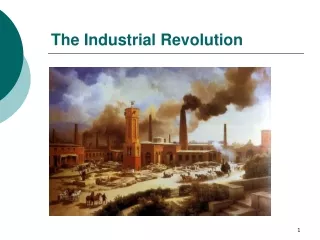
Why Did Industrialization Begin in England First?
Industrial England: "Workshop of the World" That Nation of Shopkeepers! -- Napoleon Bonaparte
Early Canals Britain’s Earliest Transportation Infrastructure
Mine & Forge [1840-1880] • More powerful than water is coal. • More powerful than wood is iron. • Innovations make steel feasible. • “Puddling” [1820] – “pig iron.” • “Hot blast” [1829] – cheaper, purer steel. • Bessemer process [1856] – strong, flexible steel.
Child Labor in the Mines Child “hurriers”
Richard Arkwright:“Pioneer of the Factory System” The “Water Frame”
Factory Production • Concentrates production in oneplace [materials, labor]. • Located near sources of power [rather than labor or markets]. • Requires a lot of capital investment[factory, machines, etc.] morethan skilled labor. • Only 10% of English industry in 1850.
The Factory System • Rigid schedule. • 12-14 hour day. • Dangerous conditions. • Mind-numbing monotony.
New Inventions of the Industrial Revolution
Crystal Palace Exhibition: 1851 Exhibitions of the new industrial utopia.
The "Haves": Bourgeois Life Thrived on the Luxuries of the Industrial Revolution
The "Have-Nots": The Poor, The Over-Worked, & the Destitute
Problems of Polution The Silent Highwayman - 1858