The Legacy of Progressive Reformers: Paving the Way for Social Change
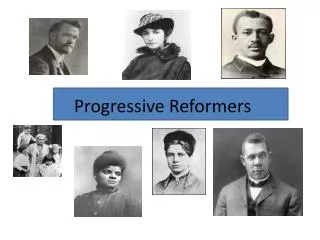
The Progressive Movement, emerging in response to societal issues of the Gilded Age, led to significant reforms aimed at addressing urban decay, child labor, women’s rights, and the excesses of big business. This era fostered optimism and the belief that individual actions could drive societal change. Notable reformers like Jane Addams, Upton Sinclair, and Theodore Roosevelt championed the causes of direct democracy, labor rights, and consumer protection. By examining their contributions and ideals, we can determine who the greatest reformer was, based on their lasting impact and commitment to social justice.


The Legacy of Progressive Reformers: Paving the Way for Social Change
E N D
Presentation Transcript
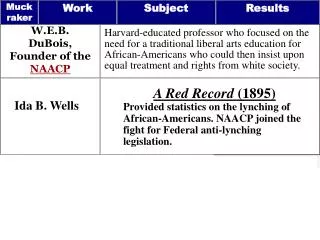
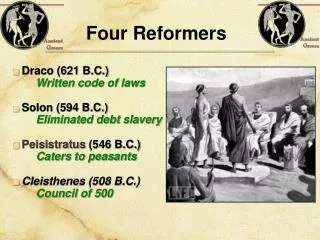
Progressive Reformers What makes a person a great reformer? Create a list of examples of great reformers.
Causes of the Progressive Movement • People felt they could affect change • Journalists showed problems • Changes associated with the Gilded Age created new societal problems • Many social and political problems
Progressives Responded to… • Opposition to urban decay and unfettered capitalism • Common bonds to make society more efficient • Optimism about the future • Abuses of Big Business • The active use of government to achieve reform
Progressive Reformers • What did they want? • Increase of direct democracy • Reformation of children’s labor laws • Expansion of women’s rights • Use of science to fix problems • Accused of socialism; used against them
Reformers? • Using your chart write a 2 paragraph explaining who was the greatest reformer during the Progressive Era. Explain how you determined who was the best (i.e. what was the criteria).