Vibrant Birds of North America: Cardinal, Oriole, Goldfinch, and More
Discover the fascinating world of North American birds, including the vibrant Northern Cardinal, Altamira Oriole, and American Goldfinch. These colorful species exhibit unique characteristics, such as mating for life and diverse nesting habits. Learn about their habitats ranging from woodlands to urban gardens, their diet of seeds and fruits, and their intriguing breeding behaviors. From the bright hues of the Indigo Bunting to the graceful Roseate Spoonbill, explore the beauty and diversity of these avian wonders across various landscapes.

Vibrant Birds of North America: Cardinal, Oriole, Goldfinch, and More
E N D
Presentation Transcript
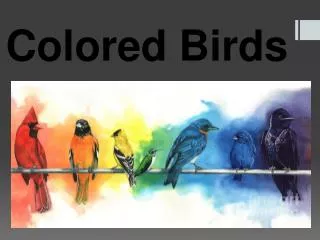
Northern Cardinal • Cardinals mate for life • Description: *7.5- 8.5 inches long *Female= grayish-brown *Male= bright red • Habitat: *woodlands, thickets, garden shrubbery, parks • Nesting *stems, twigs, bark strips *2-12 ft. above ground *Eggs= 2-5, buff or pale greenish speckled w/ brown or lilac *Incubation= 13 days by female • Offspring *Young leave when 11 days old *Up to 4 broods per season • Food *fruits, seeds, insects
Altamira Oriole • Description: *8.5-10 inches long *Male & Female= orange w/ black face, Throat, back, & wings • Habitat *streamside woodlands & desert scrub • Nesting *grass, plant fibers *12-80 ft. above ground *Eggs= 3-4, white w/ brown spots *Incubation& nestling periods= unknown *2 broods per year • Food *Insects & berries
American Goldfinch • Description *4-5 inches *Male(breeding)= bright yellow w/ black forehead, tail, & Wings *Female= dull grayish yellow w/ black wings & tail • Habitat *Fields, groves, thickets, farmlands • Nesting *plant fibers, plant down *1- 60 ft. above ground *Eggs= 4-6, bluish white w/ no markings *Incubation= 12-14 days by female *Young leave when 11-17 days old • Food *seeds, insects, berries
Canary-winged Parakeet • Description *Male & Female= green w/ white & yellow patches on wings *8-9 inches long • Habitat *gardens, croplands, suburban areas • Nesting *unlined cavity in a tree limb, building, birdhouse, or dead palm fronds *Eggs= 4-5, white w/ no markings *Incubation= 26 days by female *Young leave when 7 weeks old • Food *fruits, seeds, flowers
Indigo Bunting • Description *4.5-5.5 inches long *Male(breeding)= bright blue *Female= buff w/ faint brown streaks & bluish-tinged Wings • Habitat *brushy pastures, woodland edges • Nesting *grass, leaves, bark strips, paper *5-15 ft. above ground *Eggs= 3-6, bluish w/ no markings *Incubation= 13 days by female *Young leave when 8-10 days old • Food *insects, seeds, berries
Violet Sabrewing Hummingbird • Description *Male= violet w/ dark green, black, & white accents *Female= dark green w/ gray underside, black & white accents *6 inches long • Habitat *tropical habitats, coastal slopes, inland forests, tropical grasslands • Nesting *Moss, grass, twigs *Eggs= 2, white w/ no markings *Incubation= 20 days by female *Young leave when 22-24 days old *2 broods per year • Food *nectar, arthropods/small insects (spiders, beetles, ants, flies, etc.)
Roseate Spoonbill • Description *Male & Female= pink wings w/ red accents, orange-tinged Tail, white neck & body, gray head, spoon-shaped beak *30-34 inches long • Habitat *Marshes, lagoons, mangroves • Nesting *sticks, twigs *5-15 ft. above ground *Eggs= 1-4, white w/ brown spots *Incubation=23 days by male & female *Young leave when 5-6 weeks old • Food *fish, mollusks, shrimp, insects
Tundra Swan • Description *Male & Female= white, black beak w/ yellow dot in front of eye *47-58 inches long • Habitat *Lakes, bays, estuaries, tundra, marshes • Nesting *leaves, grass *Eggs= 2-7, dull white *Incubation= 32 days by female *Young leave nest soon after hatching, but stay w/ parents • Food *aquatic plants, mollusks
American Crow • Description *Male & Female= all black *17-21 inches long • Habitat *woodlands, plains, farmlands, orchards, towns & cities • Nesting *Eggs= 3-7, greenish w/ brown blotches *sticks *18-60 ft. above ground *Incubation= 18 days *Young leave when 5 weeks old • Food *insects, small reptiles, other baby birds, clams, carrion, fruit, crops
Burrowing Owl • Active day & night • Description *8-10.5 inches long *Male & Female= no ear tufts, sandy brown w/ lighter underside, blackish/brown bars • Habitat *grasslands, deserts • Nesting *Eggs= 5-11, white *Incubation= 28 days by male & female *old burrow of a mammal *Young soon leave burrow, but period of the stay w/ parents is unknown • Food *large insects, small rodents, occasionally birds
Gray Catbird • Got its name from the meow-sounding songs sung by the male in breeding season • Description *8-9.25 inches long *Male & Female= gray, black cap, rusty patch under tail • Habitat *woodland thickets, garden shrubbery, parks • Nesting *twigs, stems, leaves, grass *Eggs= 2-6, greenish blue w/ no markings *3-10 ft. above ground *Incubation= 13 days by female *Young leave when 10-15 days old *2 broods a season • Food *insects, spiders, berries