The Kings Becoming a Nation
180 likes | 318 Vues
This review delves into the formation of the nation of Israel, emphasizing the importance of unity. The narrative traverses the roles of key figures, including Moses, Joshua, Samuel, Saul, David, and Solomon, highlighting the transition from judges to monarchy. The people's desire for a king contrasts with prophetic warnings about the consequences of kingship. The stories of Saul and David illustrate the complexities of leadership and faith. The insights drawn from these texts provide a deeper understanding of Israel's national identity and the dynamics of divine and human authority.


The Kings Becoming a Nation
E N D
Presentation Transcript
The KingsBecoming a Nation In-class review timeline on page 119 How do you build a nation: you start with unity The comings & goings of the likes of Moses, Joshua and the Judges did not provide a continuity of leadership The Books of Samuel and the 1st Book of Kings tell us about the line of Saul, David & Solomon
In-class read together page 121 • The 1st Book of Samuel: tells us about a baby who should not have been born and was offered by his mother to God as a “Nazirite”: meaning a special dedication to God • In-class read together the bottom paragraph of the left column on page 122 • Samuel acts as priest and judge & leads the Israelites to victory over their long-time enemy, the Philistines
Samuel’s sons prove unfit to be judges yet the people clamor for a king • Samuel warns the people of the consequences of having a “king:” a king will draft their sons into an army, take their daughters as servants, and a tithe of their crops • But the people insist that they want a king • The Deuteronomists and the prophets maintained that only God was King of Israel
The Israelites wanted to be like other nations: they wanted a king – See picture of Philistine on top of page 120 • Time proved the Deuteronomists correct: nations with kings all tend to fall eventually because of the sins/errors of their kings • The Israelites felt pulled toward the success and power model of their neighboring nations like Assyria, Babylon and Egypt • Or should they stand as a nation apart?
Samuel finds an unassuming, shy, tall & good looking farm worker named Saul and appoints him King • In-class read together “The Meaning of Israel” on the top of page 124 • Saul matches a familiar pattern in God’s work: he is the lowliest and least likely choice • Read 1 Samuel 9:1-27; 10:1-27
Saul gets off to a good start as King but then loses faith in God • Read together in class the left column of page 125 • Samuel, the prophet, is led by God to find another King to replace Saul • He is led by God to a boy named David in the town of Bethlehem
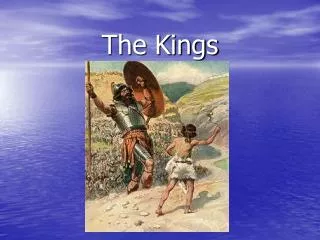
Samuel anoints David as King but only in secret – Samuel will not make his appointment public until later • Saul even takes a liking to David • There are two stories about how Saul meets David, one is the famous David slaying of Goliath • Notice the Bethlehem connection!
Saul eventually become jealous of David’s popularity and tries to kill him but fails time after time • Eventually Saul realizes that David will become the next King of Israel • The story of David is complex • Let’s read together in class starting with “David: The Outlaw” on page 127
In class read “David’s Legacy” on pages 139-140 • Go to video “David and Bathsheba”
In class read section “Passing the Torch to Solomon” on pages 140-141 • In class read the classic story of “Solomon’s Judgment” on page 141
In class read section “Solomon’s Temple” on bottom of page 142 • Go to video “Solomon’s Temple”
Summing Up Chapter 6 • In class read section “The Prayer of Israel” on page 143 • And finally, in class read together the section “Nationhood Revisited” on page 145