Overview of Chronic Food Insecurity in Uganda: Causes and Context (2011-2016)
10 likes | 123 Vues
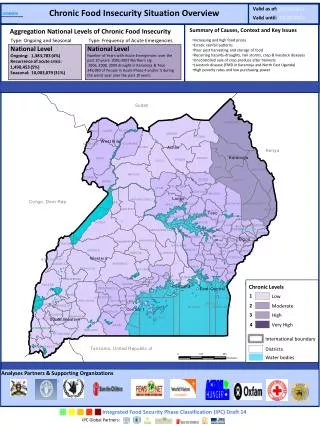
This document provides a comprehensive overview of the chronic food insecurity situation in Uganda as of August 2011, valid until August 2016. It highlights the major causes of food insecurity, including high food prices, erratic rainfall, poor post-harvest practices, and recurring hazards such as droughts and diseases. The report also discusses the impact of poverty and low purchasing power on food availability. Statistics indicate ongoing and seasonal acute emergencies affecting millions of people, underscoring the need for urgent interventions to address these challenges.


Overview of Chronic Food Insecurity in Uganda: Causes and Context (2011-2016)
E N D
Presentation Transcript
0 125 250 Kilometers Integrated Food Security Phase Classification (IPC) Draft 14 Valid as of: 20/08/2011 Chronic Food Insecurity Situation Overview ______________ UGANDA Valid until: 20/08/2016 Aggregation National Levels of Chronic Food Insecurity Summary of Causes, Context and Key Issues National Level • Increasing and high food prices • Erratic rainfall patterns • Poor post harvesting and storage of food • Recurring hazards-droughts, hail storms, crop & livestock diseases • Uncontrolled sale of crop produce after harvests • Livestock disease (FMD in Karamoja and North East Uganda) • High poverty rates and low purchasing power Type: Ongoing and Seasonal Type: Frequency of Acute Emergencies National Level Ongoing: 1,383,783 (4%) Recurrence of acute crisis: 1,498,453 (5%) Seasonal: 10,003,079 (31%) National Level Number of Years with Acute Emergencies over the past 10 years: 2001-2007 Northern Ug. 2006, 2008, 2009 drought in Karamoja & Teso 345,980 of People in Acute Phase 4 and/or 5 during the worst year over the past 10 years: Chronic Levels 1 Low 2 Moderate 3 High 4 Very High International boundary Districts Water bodies