SlideServe
Menu
Préférences
© SlideServe · v2026

Understanding Scientific Inquiry: Observations, Data, and the Nature of Science

stockton-gavyn avatar
14 diapositives · 267 Views · Nov 29, 2014

In this educational activity, students will explore the principles of scientific inquiry by observing phenomena and posing questions. Utilizing their keen observational skills through the five senses, they'll engage in discussions about why scientific questions matter. Students will learn to differentiate between qualitative and quantitative data, analyze results, and make inferences based on observations. This hands-on investigation prompts critical thinking about environmental issues and the role of data in scientific exploration. Tailored for young scientists at John Marshall Metropolitan High School.
Understanding Scientific Inquiry: Observations, Data, and the Nature of Science - slide 1
01 / 14Understanding Scientific Inquiry: Observations, Data, and the Nature of Science
1 / 17

Télécharger la présentation

Understanding Scientific Inquiry: Observations, Data, and the Nature of Science
Une image / un lien ci-dessous est fourni (tel quel) pour télécharger la présentation

Politique de téléchargement : le contenu du site vous est fourni TEL QUEL pour votre information et votre usage personnel ; il ne peut être vendu, concédé sous licence ni partagé sur d’autres sites sans l’accord de son auteur.Le contenu vous est fourni TEL QUEL, pour votre information et votre usage personnel uniquement. Téléchargez la présentation en cliquant sur ce lien. Lors du téléchargement, si vous ne parvenez pas à télécharger une présentation, l’éditeur a peut-être supprimé le fichier de son serveur.Pendant le téléchargement, si vous ne parvenez pas à obtenir une présentation, le fichier a peut-être été supprimé par l’éditeur.

F I N

Plus de contenu associé

Transcription de la présentation
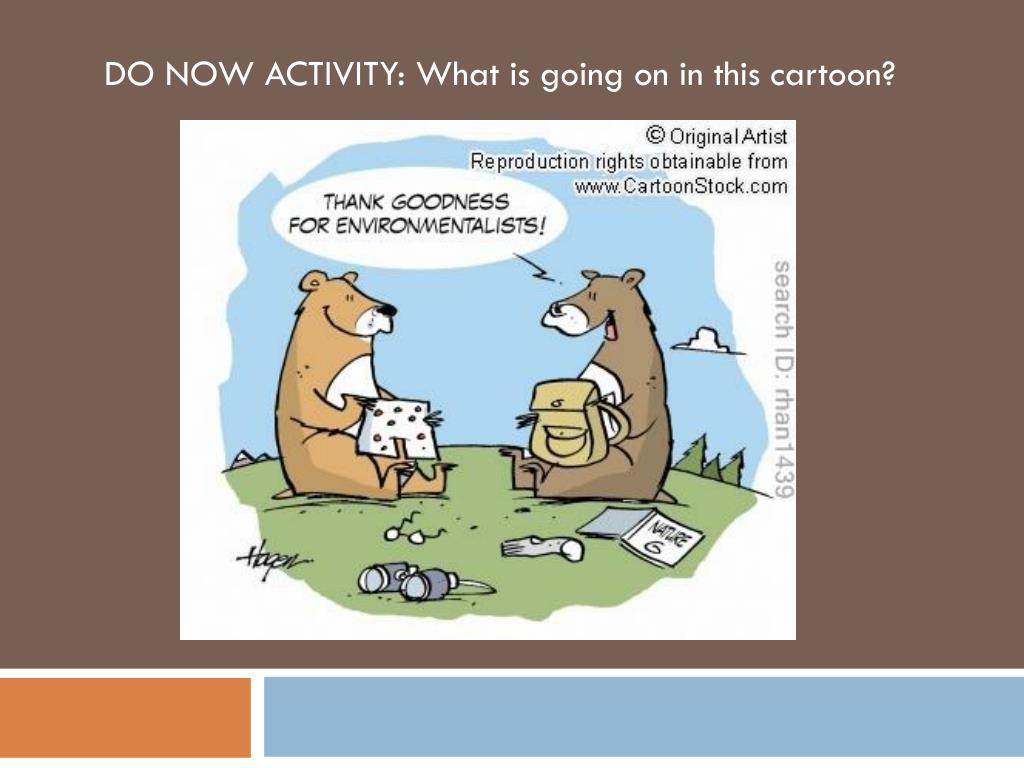
  1. DO NOW ACTIVITY: What is going on in this cartoon?

  2. The Nature of SciencePart 2 Mr. T. L. Graham Science Department John Marshall Metropolitan High School Chicago Public Schools Chicago, IL

  3. How do we begin to think like scientists? • Every good scientist has keen observation skills • Observations • Involves the five senses • Sight • Smell • Hearing • Touch • Taste • After a scientist observes something he asks why something occurring. • Why are the fish dying in the Gulf of Mexico?

  4. Using our observations • Scientist don’t simply observe things and move on. • You must question why something is occurring. • This is the first step in the scientific method/scientific inquiry. • ALL SCIENCE BEGINS WITH A QUESTION!!!

  5. ALL SCIENCE BEGINS WITH A QUESTION • The Scientific method is the process that all scientist undertake once they ask a question. • It is NOT a rigid set of procedures

  6. Interpreting the results • Once a scientist conducts an experiment the next step is to analyze the results. • After a scientist records his/her observations they infer why a phenomena is occurring. • Making inferences is the process of combining your observations with previous knowledge to draw a conclusion.

  7. What do you observe?What can you infer?

  8. What do you observe?What can you infer?

  9. What do you observe?What can you infer?

  10. What about the data? • A scientist has a slew of data that he/she may choose to record • Qualitative data- pertaining to or concerned with quality or qualities. • A.k.a. a description of the observation (the sky is blue) • Quantitative data- of or pertaining to the describing or measuring of quantity. • A.k.a assigning a numerical value to phenomena (the sky was blue for 12 hours)

  11. Let’s look at some data! • What kind of data are we looking at? • How do we know? • Why does the graph get higher in the center? • What did we just do?

  12. Let’s look at some data! • What kind of data are we looking at? • How do we know?

  13. Wrapping up your investigation • Conducting scientific procedures allow us to adequately make claims • All claims must be supported by strong evidence • If the procedure that you use is weak or has a lot of inconsistencies you do not have a valid claim. • If you have a strong procedure that endures scrutiny over and over again you may be looking at a law

  14. Group Work • Infer how an environmental scientist might use quantitative data and qualitative data in his/her work? • Give examples and justification to the above question. • Do you think one is more valuable than the other? Why or why not? • Have you heard in the media any use of data by environmental scientist recently? • Prepare a short 2-3 minute presentation