Understanding Weight and Balance: Impact on Aircraft Performance and Safety
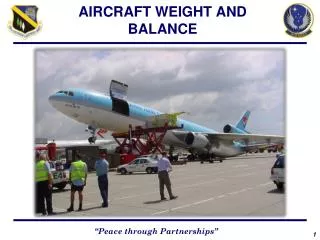
Proper handling of weight and balance is crucial for aircraft performance and safety. If not managed correctly, extreme and less extreme cases can arise, leading to higher takeoff speeds, longer takeoff runs, reduced climb rates, lower maximum altitudes, shorter ranges, and diminished maneuverability. Excessive weight can cause issues like higher stalling speeds, longer landing rolls, and improper weight distribution on the wheels. The location of the center of gravity (CG) is essential in determining aircraft stability and control, with guidelines provided by manufacturers to assist in correct loading practices.


Understanding Weight and Balance: Impact on Aircraft Performance and Safety
E N D
Presentation Transcript
Less extreme cases • Higher take off speed, • Longer take off run, • Reduced rate and angle of climb, • Lower maximum altitude, • Shorter range, • Reduced cruising speed, • Reduced maneuverability, • Higher stalling speed, • Higher approach and landing speed, • Longer landing roll, • Excessive weight on the nose wheel or tail wheel Loading is not limited to weight only. Attention must be paid to the location of the center of gravity.
Moments Moment = F x d d F
Center of gravity location affects flight • Limits certified by manufacturer • Control: if CG is too far backward • Stability: if CG is too far forward Safety