Download
1 / 8
80 likes | 196 Vues
This resource provides an in-depth exploration of the Washington/DuBois debate, emphasizing the historical context, key figures, and varying opinions. Authored by Iris Jastram and Heather Tompkins, it offers a comprehensive analysis that includes anecdotes, definitions, and biographies. It serves as a guide to finding reliable web resources related to the debate, evaluating information sources, and utilizing library resources effectively. Readers will discover strategies for advanced searching, expert consultations, and how to discern credible information for their research.

E N D
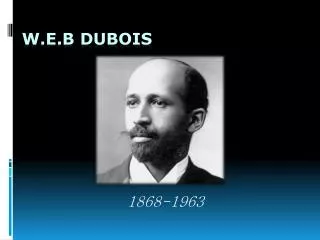
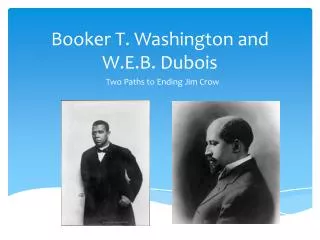
Washington/DuBois Debate: Learning about the Context Iris Jastram & Heather Tompkins CLAE July 17, 2006
Opinions Background and History Anecdotes and Stories Definitions In-depth analysis Data Biography Visual Gossip Types of Information
Books Scholarly Journals Web Sites Blogs Film Magazines Encyclopedias Friends/Family Sources of Information
Evaluating Resources Authority Purpose Relevance Content
Finding Reliable Web Resources • Consult an expert! • Subject Gateways (American Memory) • Library Guides (CLAE 2006 Resources)
Finding Reliable Web Resources • Use a web directory or specialized search engine. • Librarians’ Internet Index • OAIster • Google US Government Search
Finding Reliable Web Resources • Try advanced searching options. • Use multiple search engines. • Limit searches in Google to .edu sites. (Site:.edu) • Use quotations to search for terms as phrases. (“Tuskegee Institute”) • Include a minus sign to eliminate words or phrases that are not relevant. (curriculum-vitae)
Remember… • Evaluate information you find carefully for its authority, content, purpose and relevance for your work. • The library, its collections, services, and librarians are all here for you. • Ask us—we want to help!