Cyberbullying
100 likes | 212 Vues
Cyberbullying is a pervasive issue affecting 14%-27% of students annually, with many feeling deeply distressed by online harassment. Schools and parents must bridge the technological gap that separates their knowledge from that of children. The impacts of cyberbullying range from emotional distress to physical reactions, necessitating a proactive approach for prevention and intervention. This guide outlines effective strategies for monitoring, communication, and educational programs designed to create a supportive environment for youth and promote healthy relationships among peers.


Cyberbullying
E N D
Presentation Transcript
Cyberbullying What schools and parents are doing.
Statistics • Research • 14%-27% of students experience school bullying • National sample of American youth aged 10-17, 30% reported feeling extremely upset and 24% frightened as a result of receiving harassing on-line messages. • Parents and educators are less conversant with technology than children/students
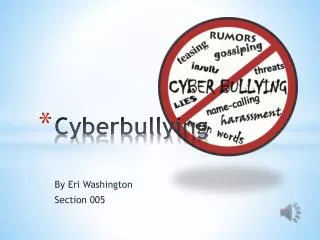
7 different categories(Willard, 2004) • Flaming • Online harassment • Cyberstalking • Denigration (put-downs) • Masquerade • Outing • Exclusion
Implications • Physical reaction • Emotional and Psychological reaction - Relationships • Educational reaction (extra curricular) • Continued stress – appetite, sleep, anxiety, depression, PTSD, affects eyes, tone of voice, posture, and overall attitude.
Prevention • Monitor phone and computer usage everyday. • Teach your children the tools to deal with the aggressive behavior and/or disrespect. • Be a person that your child will turn to if it is happening to them. • Maintain an open and honest relationship with your children.
Prevention • Use/teach positive conflict resolution. • Be the parent, not the friend! • Inform the school if it is carries over to the classroom/trusted adult. • Proactive communication. • Be a part of the process in supporting youth in your community.
Intervention • Measure the severity of the situation, get the facts. (Who, what, where, when) • Develop a plan with your child, might include seeking help from school officials or police. • Talk with other parents. • Encourage healthy relationships by providing opportunities with friends.
Dignity for All Students Act (DASA) • July 1, 2012 • Amends state education law • Employee designee • Reports to State • Code of conduct • Training for staff • Barriers to success?
What are the local schools doing? • Education in use of technology and rules/laws. • PBIS/SRO’s • Second Step • TRIBES • Restorative Practices • Olweus Bully Prevention Program • Character Education/Parent Training • Sources of Strength • Resources; Are they working? (parent involvement)
Resources • Beran,T. & Li, Q. (2007), The relationship between Cyberbullying and School Bullying, Vol. 1 (2), 15-33. • http://www.cyberbullying.us/Cyberbullying_Identification_Prevention_Response_Fact_Sheet.pdf • www.stopbullyingnow.hrsa.gov/ • www.kidshealth.org/teen/school_jobs/bullying/bullies.html • www.safeyouth.org/scripts/topics/bullying.asp • www.pbskids.org/itsmylife/friends/bullies/ • http://www.aacap.org/cs/root/facts_for_families/bullying