Download

1 / 14
140 likes | 248 Vues
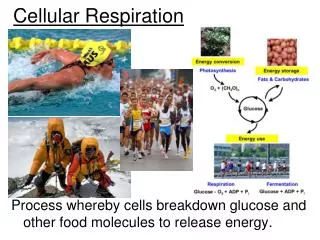
Cellular respiration is the process by which our bodies derive energy from organic molecules, primarily glucose (C6H12O6). This energy is crucial for life processes and is obtained through two main types of organisms: heterotrophs (animals, fungi, bacteria) and autotrophs (plants, algae). The conversion of glucose into ATP (adenosine triphosphate) is essential for energy use, with only about 40% of food energy converted effectively for body use. This process includes anaerobic respiration for quick bursts of energy but is less efficient compared to aerobic respiration, which requires oxygen and produces more ATP.

E N D
Our bodies use energy for… ENERGY We get this energy from breaking the bonds of Organic Molecules!
2 ways to obtain the most common fuel, c6h1206… 2. Get it elsewhere! • Heterotrophs • Animals • Fungi • Bacteria Cellular Respiration • Make your own! • Autotrophs • Plants • Algae Photosynthesis
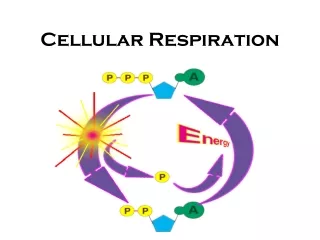
Glucose can’t directly fuel life processes… CONVERSION CONVERSION C6H12O6 is converted into ATP = usable Energy
Human conversion efficiency… $100.00 $100 worth of food fuel $40 worth of ENERGY
ENERGY is lost as HEAT
when the body needs energy, what happens… In the first few seconds After 15/20min From 1-3s 90s From 90s 15/20min
In the first few seconds… • ATP stored in your muscles is used up!
From 1-3s90s… C6H12O6 • The body’s cells don’t have a large supply of O2 • ANAEROBIC RESPIRATION No O2 pyruvate C6H12O6 2 ATP LACTIC ACID pyruvate Glycolysis Lactic Acid Fermentation
Anaerobic respiration Advantages • Fast Energy Boost Disadvantages • Lactic Acid buildup = muscle fatigue • Only 2 ATP from 1 glucose (10% efficient) O2 gets rid of the Lactic Acid…breathing rate will increase!
From 90s to 15/20min… Once breathing rate …more O2 is available! AEROBIC RESPIRATION CO2 H2O O2 36 ATP pyruvate
aerobic respiration Disadvantages • Needs O2 • Not for Quick bursts of ENERGY Advantages • Continuous supply of ENERGY • 36 ATP from 1 glucose (38% efficient)
After 15/20min… • Glucose stores are depleted! • The body uses other organic molecules • Lipids • Proteins
Cellular Respiration: Equation C6H12O6 + 6O2 (38)ATP + 6CO2 + 6H2O ase