Download
1 / 13
130 likes | 265 Vues
This resource delves into the endocrine system, outlining the roles of various glands, including the hypothalamus, pituitary gland, adrenal glands, and sex glands. It covers crucial topics such as protein and lipid-soluble hormones, the action of prohormones, and the intricate feedback mechanisms regulating hormonal secretion. Key hormones like growth hormone (GH), antidiuretic hormone (ADH), and oxytocin are discussed, highlighting their functions in growth, metabolism, and reproductive processes, as well as the importance of receptors in hormonal response.

E N D
The Endocrine Glands SBI 4U January 10th, 2013
Answer the Following Questions! • Protein hormones are hydrophilic. True False • What are prohormones? • How are hormones different from local regulators?
What is the Endocrine System? • The endocrine system is made up of glands that produce and secrete hormones • Hormones regulate body’s growth, metabolism and sexual development and function • In charge of body processes that happen slowly
Water vs. Lipid-soluble Mechanisms • Single target cell may have receptors for several hormones. Ex: liver cells (insulin & glucagon) • Hormones can interact with different types of receptors in a host of cells
Mechanisms by which hormones work • Only cells with receptors respond to hormones • Once bound to receptors, hormones produce response by inactivating or activating cellular processes • Hormones effective in very small concentrations • Response to a hormone differs among target organs and among species
Hormones as Feedback Mechanisms • Secretion of most hormones as a result of negative feedback mechanisms • Ex: hypothalamus thyroid releasing hormone triggers pituitary gland to release TSH triggering thyroid to release thyroid hormones. Where is the negative feedback?
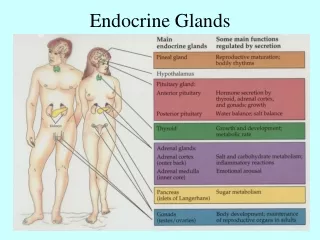
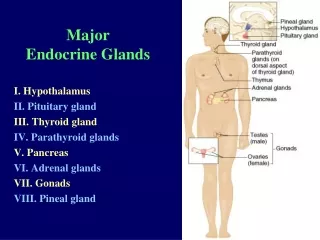
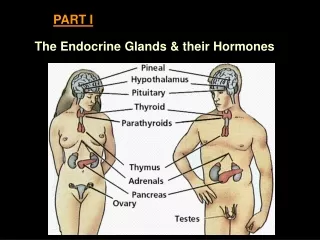
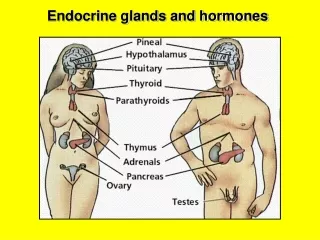
The Endocrine Glands • Hypothalamus • Anterior Pituitary and Posterior Pituitary • Adrenal glands • Ovaries • Testes • Pineal gland • Thyroid gland • Parathyroid glands
Hypothalamus • Hypothalamus is a region of the brain also a part of the nervous system • Neurohormones: control production of other hormones in pituitary gland • 2 types of neurohormones: releasing hormones & inhibiting hormones • Controlled by input from nervous system
Pituitary Gland • Pituitary gland: 2-lobed gland within the cranial cavity that produces hormones that control the other endocrine glands • “Master gland” production of hormones controlling most endocrine glands • Located below brain, within the cranium • Anterior lobe & posterior lobe • Neurohormones travel through portal vein connecting hypothalamus to pituitary gland
Anterior Pituitary Gland • Endocrine system largely controlled by the anterior pituitary hormones, which are controlled by the hypothalamus inhibiting or releasing hormones • Regulator hormones like ‘thyroid stimulating hormone’ • Ex: Growth hormone (GH) • GH cell division, protein synthesis, and bone growth • GH binds to muscle, causing the release of insulin-like growth factor (IGF) • GH also maintains availability of glucose and fatty acids
Deficiencies in GH Overproduction of GH • GH binds to muscle, causing the release of insulin-like growth factor (IGF) • GH also maintains availability of glucose and fatty acids • Overproduction of GH: pituitary giant • Deficiency of GH: pituitary dwarf
Posterior Pituitary Gland • Stores and released 2 hormones: antidiuretic hormone and oxytocin (both produced in hypothalamus) • ADH: stimulates kidney cells to absorb more water from urine, increases blood volume • Ethanol and caffeine inhibit ADH • Nicotine and stress stimulate ADH • ADH helps maintain blood pressure by reducing water loss
Posterior Pituitary Gland • Oxytocin stimulates release of milk from mammary glands • Also helps in the stimulation of contractions during childbirth