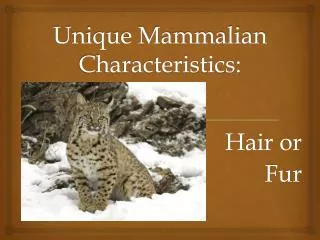
Unique Mammalian Characteristics:
This overview explores the unique characteristics of mammalian fur and hair, focusing on their essential functions. Fur serves multiple purposes, including body temperature regulation, insulation, waterproofing, protection from sunlight, camouflage, and sensory functions. Examples include how polar bears absorb heat with dark skin beneath clear fur, and how the snowshoe hare changes color seasonally for camouflage. Additionally, adaptations such as quills in echidnas provide defense against predators. Understanding these characteristics offers insight into the survival strategies of various mammals.

Unique Mammalian Characteristics:
E N D
Presentation Transcript
Unique Mammalian Characteristics: Hair or Fur
Scale Patterns Deer Mink Caribou Elk Moose
Functions of Fur • Regulate Body Temperature: Endotherms! • Insulation • Water Proofing • Protect skin from sunlight • Camouflage • Sense organ • Defense
If the polar bear has clear fur, how do they absorb sunlight for heat????
Insulation • Hair is hollow to provide insulation • Heat is kept close to the body
Water Proofing • Very soft, insulated under coat which protects the outer layer of long guard hairs • The outer layer traps air to keep them dry and warm underwater
Sun protection • Mammals have hair to protect their skin from sunlight as well • If animals didn’t have fur/hair sun burning would occur
Camouflage • Mammals use their fur to help them hide from predators • The snowshoe hare is white during the winter to help blend in with the snow, and brown during the spring/summer time to help blend in to the forest
Defense • The echidna has sharp spines or quills to defend themselves from predators • Quills will release from body when another animal attacks
Sensory Organ • Many mammals have whiskers coming out from their snout • Used as a sensory organ to feel around when sight can not be used to navigate food
Journal # 3 Review!!!2/6/14 • Name 3 functions of mammal fur/hair. • Explain a defense mechanism using fur/hair. • Name a specific “modified” hair.